


What Progressive Die Stamping Means for High-Volume Production
You're sourcing metal parts at scale. Maybe it's thousands of brackets per month, or millions of electrical contacts per year. At some point, every procurement engineer lands on the same question: which progressive die stamping manufacturers can actually deliver what my project needs?
Before you start requesting quotes, you need a solid understanding of what this process is, how it works, and why it dominates high-volume metal part production. That foundation shapes every conversation you'll have with potential suppliers and helps you separate capable partners from shops that simply own a press.
What Is Progressive Die Stamping
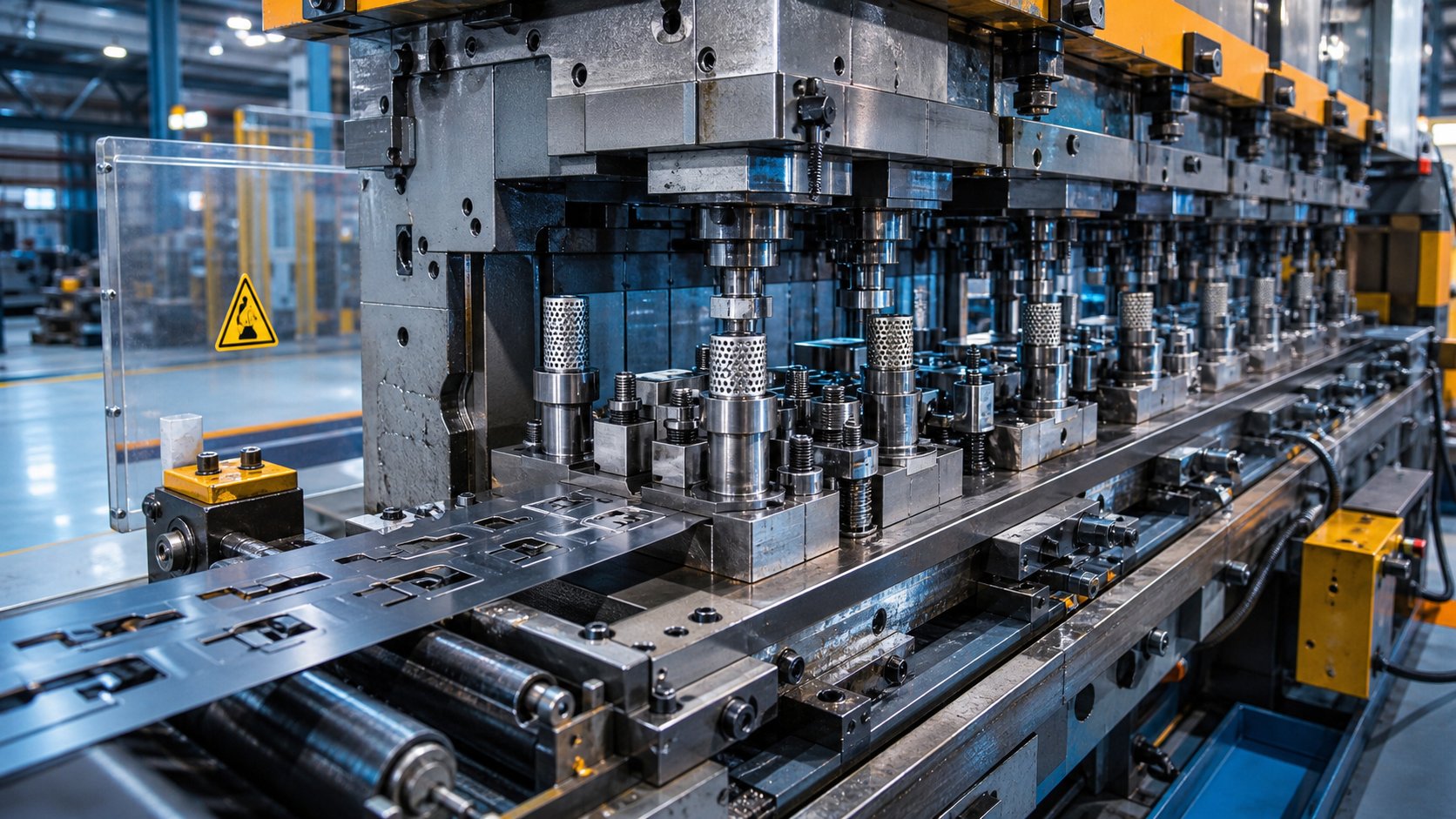
Progressive die stamping is a metal forming process in which a continuous strip of material advances through a series of sequential workstations within a single die set, with each press stroke performing a different operation until a finished part is produced and separated from the strip.
Imagine a metal coil feeding into a stamping press. With every stroke, the strip moves forward by a precise increment, known as the die pitch. Each station it passes through performs a specific task: punching a hole, forming a bend, adding a coined feature, or trimming excess material. By the time the strip reaches the final station, the completed part drops free. One stroke, one finished component, repeated hundreds of times per minute.
The term "progressive" refers to this incremental transformation. A progressive die is essentially a custom-engineered tool that consolidates what would otherwise require multiple machines, multiple setups, and multiple handling steps into a single automated operation. The metal strip acts as its own conveyor, carrying each part-in-progress from one station to the next without human intervention.
Why Manufacturers Use Progressive Dies for Volume Production
Progressive stamping earns its place in production lines because it solves three problems simultaneously: speed, consistency, and cost per unit. Presses operating at 25 to 200 strokes per minute or more can output finished parts at rates that no other forming method matches for small-to-medium-sized components.
Every stroke produces identical results because the same punches and die surfaces shape the material in the same sequence, under the same conditions. This eliminates the cumulative variation that creeps in when parts transfer between separate machines. The result is tight tolerances, uniform features, and minimal scrap across production runs that span millions of cycles.
Industries like automotive, electronics, HVAC, lighting, and consumer goods rely on this process for brackets, connectors, fasteners, contacts, and housings. These are parts where dimensional consistency isn't optional and where per-unit economics matter at scale.
Understanding progressive die stamping at this level isn't academic. It's the lens through which you evaluate whether a manufacturer's engineering depth, press capabilities, and tooling expertise match the complexity of your part. The process details directly inform the questions you should ask and the red flags you should watch for.
How the Progressive Die Stamping Process Works Step by Step
Knowing that a strip moves through stations is one thing. Understanding what actually happens at each station, and why the sequence matters, gives you a sharper lens for evaluating whether a manufacturer's progressive die tooling matches the complexity of your part.
Stage-by-Stage Breakdown of Progressive Die Operations
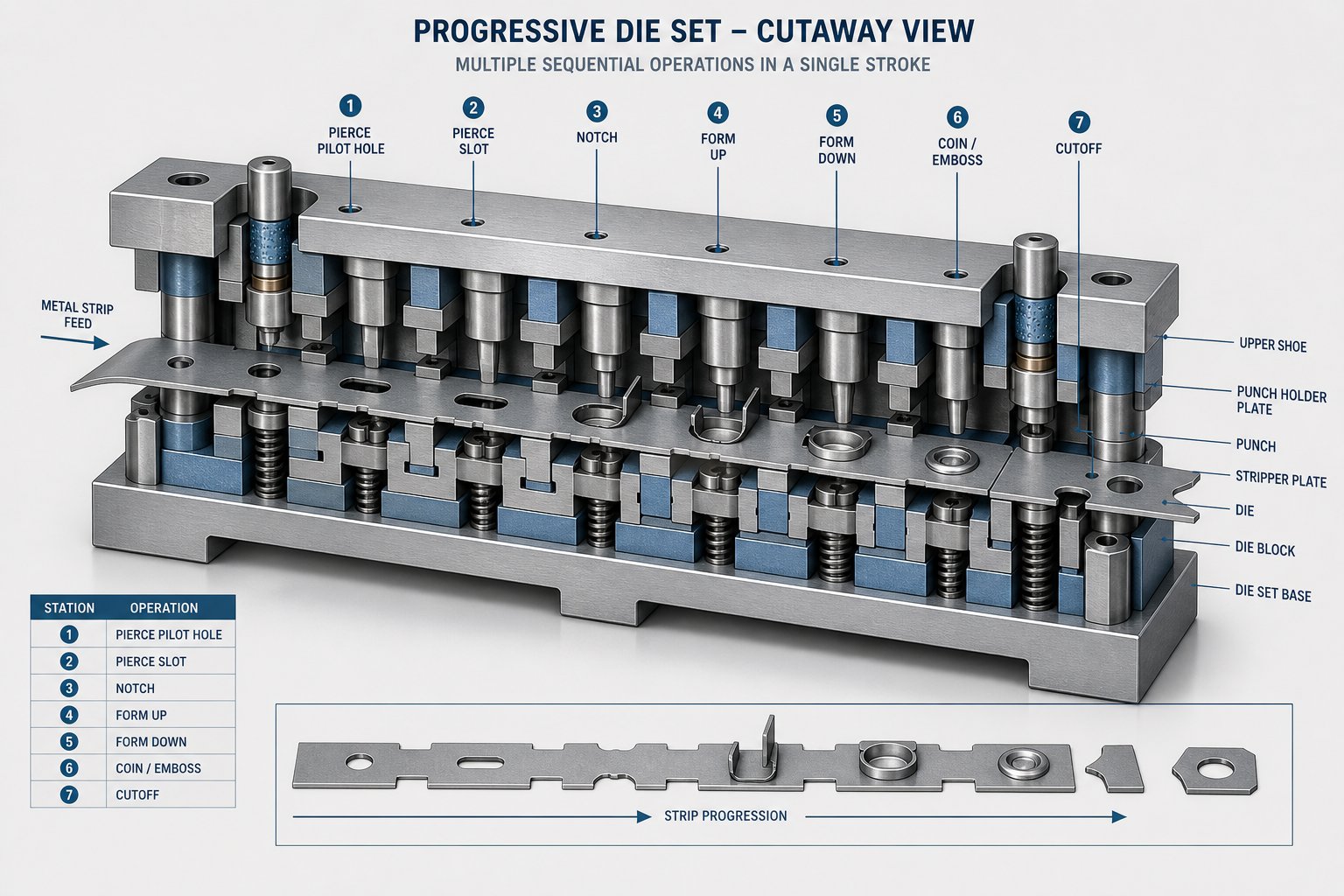
Each station in a progressive stamping die performs a specific operation that builds on the work done upstream. Skip a step, rearrange the sequence, or miscalculate clearances at any point, and the finished part fails. Here's how the process unfolds from raw coil to completed component:
- Feeding and Uncoiling - A coil of sheet metal mounts on an uncoiler and feeds into the progressive stamping press at precise intervals synchronized to the press stroke. Roll feeders or servo feeders control the strip advancement (known as pitch) to within thousandths of an inch, ensuring each station receives material in exactly the right position.
- Piercing - The first forming stations typically punch pilot holes and functional openings. Pilot holes serve as alignment references for every downstream station, while functional holes become part of the finished geometry. Piercing happens early because removing material before forming prevents distortion around hole edges.
- Blanking - Portions of the strip are cut away to define the part's outer profile or to create internal features. Blanking stations may partially cut the outline while leaving tabs that keep the part attached to the carrier strip for continued transport through the die.
- Forming - Bending, drawing, and flanging operations shape the flat blank into three-dimensional geometry. Forming stations apply controlled force to deform the metal plastically, creating angles, channels, ribs, or contours. The sequence moves from simple bends to more complex shapes to manage material stress progressively.
- Coining - High-pressure compression refines specific features, flattens surfaces, sharpens radii, or embosses details that require tighter dimensional control than standard forming achieves. Coining is placed after forming because it fine-tunes geometry that has already taken basic shape.
- Cutoff - The final station severs the completed part from the carrier strip. The finished component drops free, often into a bin or onto a conveyor, while the remaining skeleton strip exits for recycling.
Notice how each stage depends on accurate execution of the one before it. Pilot holes drilled in station two guide every subsequent operation. Forming relies on material that was correctly blanked. Coining assumes the bend geometry beneath it is already within spec. This cascading dependency is exactly why the engineering behind a progressive stamping die demands precision at the design stage, not just during production.
How Multi-Station Forming Achieves Part Complexity
The number of stations in a die directly reflects part complexity. A simple flat bracket with two holes might require only four or five stations. A three-dimensional connector with multiple bends, embossed features, and tight-tolerance openings could need twelve or more. Each additional station adds tooling cost, increases die length, and demands a larger die stamping press with adequate bed size and tonnage.
Press speed ties directly into station design as well. A die built for high speed stamping at 200-plus strokes per minute needs stations engineered for rapid strip advancement, efficient scrap removal, and minimal dwell time. Fewer, simpler stations support faster cycle rates. More complex stations with deep draws or heavy coining may require the press to slow down, trading speed for forming force.
When you're evaluating a manufacturer, ask how many stations their typical dies run and what press speeds they achieve for parts similar to yours. A shop comfortable designing 15-station tools for intricate geometries at 100+ strokes per minute operates at a different engineering tier than one running six-station dies for flat blanks. That distinction directly affects whether they can handle your part's complexity without costly trial-and-error during tool development.
The relationship between station count, press capability, and achievable part geometry also shapes your tooling investment. More stations mean higher upfront die cost, but they unlock the ability to consolidate operations that would otherwise require secondary processes, separate machines, and additional handling. The economics shift depending on volume, which raises a natural question: at what production quantities does this investment actually pay off?
When Progressive Die Stamping Is the Right Choice for Your Project
Tooling for progressive dies isn't cheap. You're looking at a significant capital outlay before a single production part drops off the press. So the real question isn't whether the process works, it's whether your volumes justify the investment over simpler alternatives like compound dies, transfer dies, or single-hit stamping.
Volume Thresholds Where Progressive Dies Beat Other Methods
Progressive metal stamping follows a distinct cost curve. The upfront spike is steep, but the per-part cost flattens quickly as volume grows. Economic viability for progressive dies typically starts around 50,000 to 100,000 units per year, though ultra-simple geometries may justify the investment at 30,000 to 50,000 units. Below those thresholds, methods with lower tooling costs, like CNC laser cutting or single-stage stamping, often make more financial sense.
Contrast that with transfer stamping, which suits medium-to-high volumes (roughly 25,000 units and above) but serves larger or deep-drawn parts that can't stay attached to a carrier strip. Compound dies occupy a middle ground: moderate tooling cost, high precision for flat parts, but limited to simpler geometries and smaller runs. Single-hit stamping costs the least upfront but carries higher labor and handling expenses that scale linearly with quantity.
For long run progressive stamping programs spanning hundreds of thousands or millions of parts, the tooling cost per unit becomes negligible. That's where the economics become compelling: raw material and press time dominate the per-part cost, and high volume stampings run at speeds no other method can match for small-to-medium components.
Understanding Tooling Investment Versus Per-Part Economics
Here's how progressive dies compare against alternative methods across the dimensions that matter most to buyers:
| Factor | Progressive Die | Transfer Die | Compound Die | Single-Hit Stamping |
|---|---|---|---|---|
| Tooling / Setup Cost | Very High | High | Moderate | Low |
| Per-Part Cost (Low Volume) | Very High | High | Moderate | Low to Moderate |
| Per-Part Cost (High Volume) | Very Low | Low | Moderate | High |
| Part Complexity Capability | High (multi-feature, 3D geometry) | High (large or deep-drawn parts) | Low (flat, single-plane) | Low (one operation per stroke) |
| Production Speed | Very Fast (200-600+ SPM) | Moderate | Moderate to Fast | Slow |
| Ideal Annual Volume | 50,000+ units | 25,000+ units | 5,000-50,000 units | 1-10,000 units |
The pattern is clear: progressive dies demand more capital but reward you with the lowest per-part cost at scale and the fastest cycle times. Transfer dies offer similar complexity handling for larger components but run slower. Compound dies work well for precision flat parts in moderate quantities. Single-hit operations keep things simple and affordable for short runs but become expensive when volumes climb.
When you engage potential suppliers, request a breakeven analysis that shows exactly where progressive tooling pays for itself against your projected volumes. A capable manufacturer will model this for you, factoring in your annual quantities, expected tool life, and any secondary operations. If the numbers don't cross over within your production horizon, a different method may serve you better, and a trustworthy shop will tell you that.
Volume alone doesn't settle the decision, though. The material you're stamping and the tolerances you need also shape both die design and total cost, and not every manufacturer handles every material equally well.
Materials and Tolerances in Progressive Die Stamping
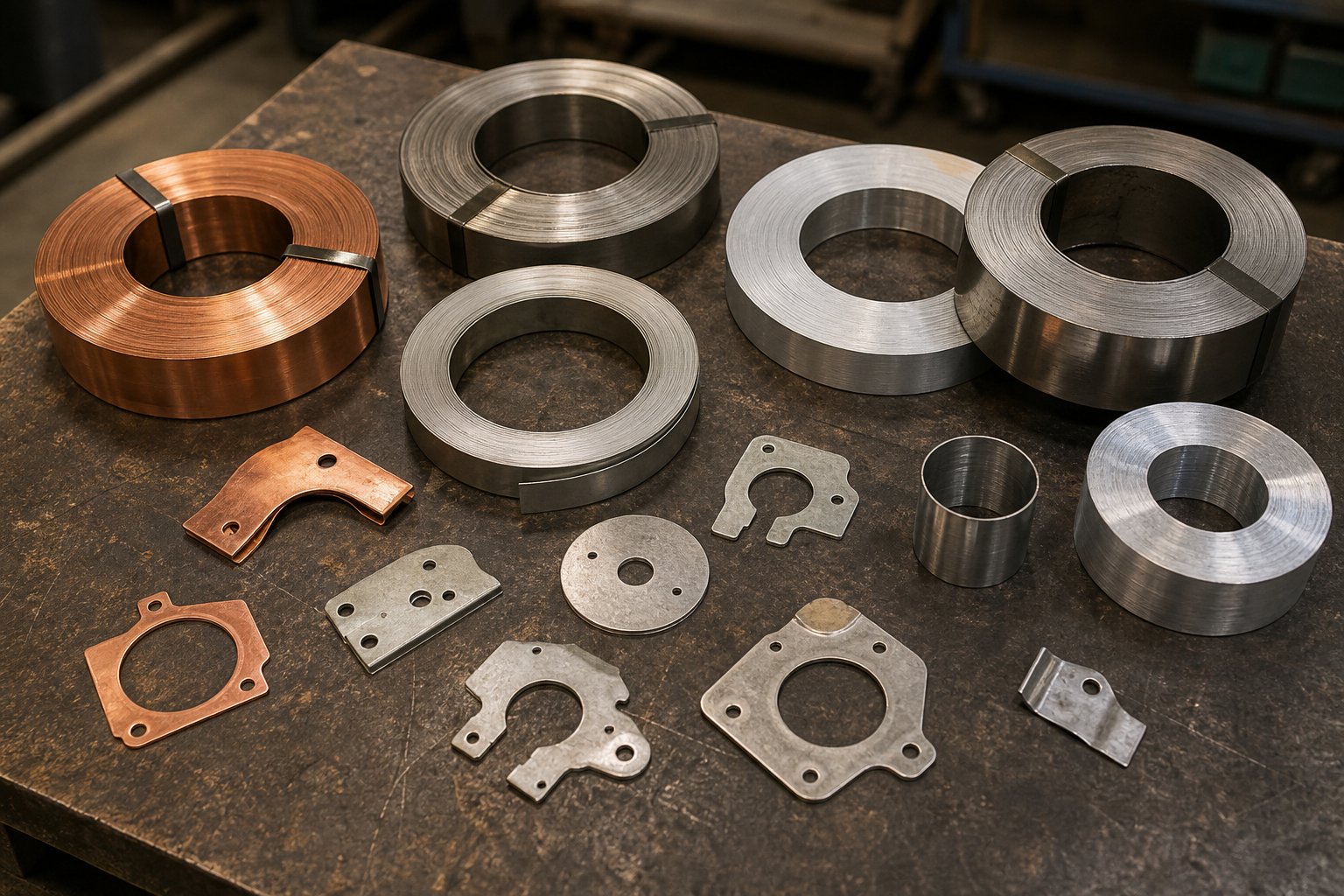
Your choice of material doesn't just determine what the finished part looks like. It fundamentally shapes how the die is designed, how fast the press can run, how quickly tooling wears, and what tolerances are realistically achievable. Two parts with identical geometry but different substrates may require completely different station configurations, punch materials, and press settings. That's why progressive stamping materials deserve serious attention before you ever submit an RFQ.
How Material Properties Influence Die Design and Outcomes
Every metal brings a unique combination of hardness, ductility, tensile strength, and springback behavior to the stamping process. These properties dictate how aggressively the die can form the strip, how many stations are needed, and how long tooling lasts before maintenance or replacement.
Consider springback: when a metal is bent, it partially returns toward its original shape once the forming force releases. Harder materials with higher yield strength spring back more. Die engineers compensate by over-bending, adding coining stations, or adjusting forming radii. A manufacturer experienced in stainless steel progressive stamping, for instance, knows that 300-series stainless requires significantly more springback compensation than mild carbon steel, often adding stations and complexity to the die.
Ductility matters just as much. Highly ductile metals like copper and aluminum tolerate aggressive forming without cracking, meaning fewer intermediate stations and gentler radii. Harder materials like spring steel or work-hardened stainless need progressive forming across multiple stages to avoid fractures, which translates into longer dies and higher tooling investment.
Tool wear is another direct consequence of material choice. Abrasive or high-strength substrates accelerate punch and die insert degradation. Carbon steel progressive stamping runs tend to be gentler on tooling than stainless or high-strength low-alloy (HSLA) steel, which means longer intervals between sharpening cycles and lower maintenance costs over time.
| Material | Key Properties | Forming Behavior | Typical Applications |
|---|---|---|---|
| Carbon Steel (low to medium) | High strength, good ductility, cost-effective | Moderate springback, easy to form, lower tool wear | Brackets, structural parts, automotive components, fasteners |
| Stainless Steel (300/400 series) | Corrosion resistant, high hardness, work-hardens quickly | High springback, requires more forming stations, accelerates tool wear | Medical devices, food processing, marine hardware, plumbing |
| Copper | Excellent conductivity, very ductile, soft | Minimal springback, forms easily, low tool wear | Electrical contacts, bus bars, connectors, heat exchangers |
| Aluminum (1100, 3003, 5052) | Lightweight, good formability, corrosion resistant | Low-to-moderate springback, prone to galling without proper lubrication | Enclosures, heat sinks, EMI shields, lightweight structural parts |
| Brass (C260, C360) | Good machinability, moderate strength, decorative finish | Low springback, excellent formability, minimal tool wear | Terminals, connectors, decorative hardware, valves |
| Beryllium Copper | High fatigue strength, conductive, non-sparking | Moderate springback, needs careful forming sequences | Springs, aerospace components, high-stress electrical contacts |
Notice how progressive stamping materials aren't interchangeable from a tooling perspective. A die designed for copper progressive stamping won't perform correctly if you switch to stainless steel midstream. The clearances, punch geometry, lubrication requirements, and station counts are all material-specific. This is precisely why you should discuss your substrate choices early in conversations with potential suppliers.
Tolerance Capabilities Across Different Materials and Complexities
High precision metal stamping through progressive dies can achieve tight dimensional control, but achievable tolerances depend on a web of interacting factors. Material behavior sits at the center of that web.
In general terms, progressive die stamping holds tolerances in the range of plus or minus 0.001 to 0.005 inches for most features, with some operations like piercing achieving even tighter control. But those numbers shift based on several variables:
- Material thickness - Thinner stock is more sensitive to forming forces and tends to distort more easily, potentially widening tolerance bands.
- Material hardness and springback - Higher springback makes it harder to hold angular tolerances on bends. Each bend may vary slightly unless the die compensates precisely.
- Part geometry complexity - Parts with multiple bends, deep forms, or features near edges accumulate more variation than flat, simple components.
- Station count and die condition - More stations introduce more cumulative positioning error, though well-maintained pilot systems minimize this. Tool wear over long runs gradually loosens tolerances until maintenance restores sharpness.
- Press consistency - Stroke-to-stroke repeatability of the press ram directly influences dimensional consistency. Servo-driven presses typically outperform mechanical presses for tolerance-sensitive work.
Aluminum progressive stamping, for example, can hold tight flat tolerances but is prone to surface galling that affects finish quality if lubrication or die coatings aren't properly managed. Stainless steel progressive stamping achieves excellent dimensional stability in pierced features but requires careful attention to bend angles due to aggressive springback and work hardening.
The practical takeaway? Don't assume that a tolerance printed on your drawing is automatically achievable in your chosen material. When evaluating manufacturers, ask how they handle tolerance management for your specific substrate. A shop with deep experience in your material will explain how they compensate for springback, manage tool wear schedules, and validate dimensional stability across production runs. One that lacks that experience may quote aggressively but struggle to hold spec once production ramps.
Material expertise is one indicator of a manufacturer's depth. Certifications and process controls tell you even more about whether their quality systems can deliver consistently, especially in regulated industries where traceability and repeatability aren't just preferences but requirements.
Industry Certifications That Signal Manufacturer Quality
A certification logo on a supplier's homepage looks reassuring. But what does it actually tell you about their ability to produce your parts consistently, traceably, and within spec over millions of cycles? For buyers evaluating stamping die manufacturers, certifications aren't trophies. They're evidence of documented process control systems that have been independently audited and verified.
Not all certifications carry the same weight for every application. The one your project requires depends on your industry, your end-use environment, and the regulatory landscape your parts enter.
Key Certifications Every Buyer Should Verify
Here's what each major certification covers and which sectors demand it:
- ISO 9001 - The baseline quality management system standard. It establishes documented processes for production control, corrective actions, internal audits, and continuous improvement. Any progressive die stampings supplier you consider should hold this as a minimum. It doesn't guarantee excellence, but its absence signals a lack of basic process discipline.
- IATF 16949 - Built on top of ISO 9001 with automotive-specific requirements for defect prevention, variation reduction, and waste elimination across the supply chain. If you're sourcing automotive components progressive stamping, this certification is non-negotiable. It requires suppliers to demonstrate process capability studies, control plans, and advanced product quality planning (APQP).
- AS9100 - The aerospace equivalent, adding requirements for configuration management, risk management, product safety, and counterfeit part prevention. Aerospace supply chains demand full material traceability and first-article inspection reports. A manufacturer without AS9100 simply cannot participate in most aerospace programs.
- ISO 13485 - The quality management standard for medical devices. Unlike ISO 9001's focus on customer satisfaction and continuous improvement, ISO 13485 emphasizes regulatory compliance and risk management to ensure the safety and effectiveness of medical devices. It requires enhanced traceability, contamination control, complaint handling processes, and longer record retention periods. For buyers sourcing medical progressive stamping components, this certification demonstrates that the manufacturer operates under controls aligned with FDA, EU MDR, and other global regulatory frameworks.
You'll notice these certifications build on each other. A manufacturer holding IATF 16949 already has ISO 9001 as its foundation. One certified to ISO 13485 has adapted that framework for medical device risk management. The layering matters because it reflects progressively deeper process controls tailored to industry-specific failure consequences.
Why PPAP and Process Validation Matter for Regulated Industries
Certifications define the system. PPAP, the Production Part Approval Process, validates the output. Originally developed by the Automotive Industry Action Group (AIAG), PPAP is a standardized procedure that ensures a supplier's parts meet all engineering specifications before mass production begins. It requires documented evidence including process flow diagrams, capability studies (CpK analysis), measurement system analysis, control plans, and material certifications.
Why should this matter to you? Because PPAP shifts the burden of proof onto the manufacturer. They must demonstrate, with data, that their process produces conforming parts repeatably before a single production unit ships. For automotive components progressive stamping and aerospace applications, PPAP Level 3 or higher is standard. Medical device programs may require equivalent validation documentation under Design History Files.
The practical benefit is risk reduction. A manufacturer that routinely completes PPAP submissions has the infrastructure to catch process drift, validate tooling changes, and trace any nonconforming part back to its root cause. One that can't produce a PPAP package on request likely lacks the statistical process controls and documentation rigor that regulated industries demand.
There's another factor buyers often overlook: vertical integration. A stamping die manufacturer with in-house tooling design, wire EDM, and CNC grinding controls every variable that affects part quality under one quality system. When tooling is outsourced to a separate shop, traceability gaps emerge. Die modifications happen outside the certified QMS, inspection standards may differ, and iteration cycles slow down. That doesn't mean outsourced tooling is always problematic, but it does mean you should ask where the dies are made and whether that process falls within the same audited quality umbrella as production.
Certifications and PPAP readiness give you a reliable filter for your supplier shortlist. They tell you which manufacturers operate with the documentation, traceability, and process discipline your application requires. But certifications alone don't reveal whether a shop has the right presses, the right engineering depth, or the right capacity for your specific project. That evaluation requires a different set of questions entirely.
How to Evaluate and Select the Right Progressive Die Stamping Manufacturer
You've confirmed that progressive die stamping fits your project's volume, material, and tolerance requirements. You've filtered potential suppliers by the certifications your industry demands. The next challenge is harder: figuring out which progressive die manufacturer actually has the engineering depth, equipment, and capacity to deliver your parts reliably at scale.
Price alone won't tell you that. Neither will a polished website. What separates a capable partner from a risky bet comes down to verifiable technical criteria and the right questions asked early in the conversation.
Essential Criteria for Evaluating Manufacturer Capability
Think of this as your due-diligence checklist. Each criterion reveals something about whether a supplier can handle your part's complexity, volume, and quality requirements without costly surprises mid-program:
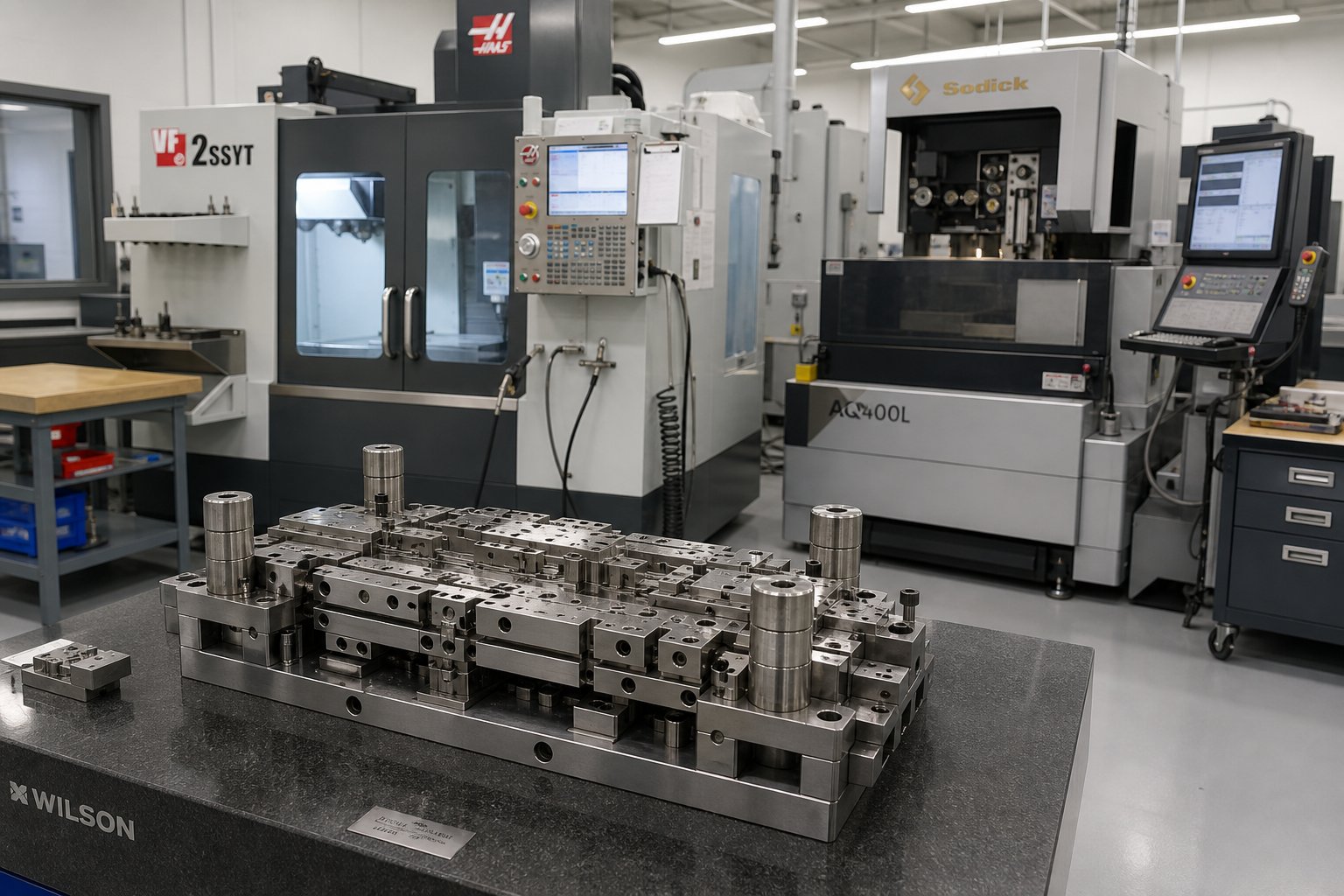
- In-house progressive tool and die capability - Does the manufacturer design and build dies internally using wire EDM, CNC machining, and surface grinding? Vertically integrated tooling means faster iteration cycles, tighter quality control over die components, and quicker turnaround on modifications. When tooling adjustments happen under one roof, you eliminate communication gaps and scheduling delays between separate tool shops.
- Press tonnage range and stroke speed - Press capacity determines what part sizes, material thicknesses, and forming forces the shop can accommodate. A manufacturer running presses from 45 to 400+ tons covers everything from delicate connector terminals to heavier structural brackets. Stroke speed (strokes per minute) tells you about throughput potential and whether their equipment matches your volume targets.
- Material-specific experience - Not all shops handle all substrates equally. Ask for examples of production runs in your material. A manufacturer experienced in stainless steel behaves differently at the die design stage than one specializing in copper or aluminum. Material familiarity translates directly into fewer tooling revisions and tighter first-pass yields.
- Engineering support and DFM collaboration - The best progressive die manufacturers function as engineering partners, not just vendors. Look for suppliers who offer Design for Manufacturability review before tooling kicks off. Early-stage DFM collaboration can reduce scrap, streamline tooling, and improve part performance before production begins.
- Secondary operations and finishing - Can they handle plating, heat treatment, tapping, welding, or assembly in-house or through managed partners? Progressive die metal stamping services that extend beyond the press reduce your supply chain complexity and shorten lead times.
- Prototyping through production scalability - A manufacturer capable of supporting early prototype tooling and then transitioning to hardened production dies gives you a single partner across the entire program lifecycle, from validation through high-volume runs.
Manufacturers with in-house progressive die design capability, such as YICHEN, can reduce iteration cycles because tooling design, machining, build, and validation all happen within one operation. For production engineers seeking tight repeatability and scalable mass production, that integrated approach eliminates the handoff delays and miscommunication that commonly plague multi-vendor tooling arrangements.
Questions to Ask Before Committing to a Supplier
A capable shop will answer these without hesitation. Vague or deflective responses are themselves a data point:
- What is your typical lead time from die design approval to first article production?
- How many stations do you typically design for parts with similar geometry and material to mine?
- Do you own and maintain all progressive tooling in-house, or is any portion outsourced?
- Can you provide PPAP documentation at the level my industry requires?
- What press tonnages and speeds will run my part, and what's your current capacity utilization?
- Do you offer DFM feedback before finalizing die design, and is your engineering team involved in quoting?
- How do you handle tool maintenance, sharpening schedules, and spare components for long production runs?
These questions force specificity. You'll quickly distinguish progressive die stamping services that genuinely invest in engineering from those that simply broker tooling and press time.
Red Flags That Signal Potential Quality or Delivery Issues
Watch for these warning signs during evaluation. Any single one warrants deeper investigation. Multiple flags together suggest you should move on:
- No in-house tooling - If a supplier outsources all die construction, they lack direct control over the most critical variable in your program. Modifications take longer, quality oversight splits across organizations, and accountability blurs.
- Reluctance to share process capability data - A manufacturer confident in their processes will readily provide CpK data, SPC charts, or sample inspection reports. Resistance here often masks inconsistency.
- Quoting without reviewing your part geometry in detail - Accurate progressive die quoting requires thorough review of your CAD data, tolerances, and material specs. A fast quote based on minimal information usually leads to change orders later.
- No clear DFM feedback loop - If the supplier accepts your drawing without suggesting any improvements or flagging potential forming challenges, their engineering engagement is likely shallow.
- Vague answers about capacity and lead time - Manufacturers at or near capacity may accept your order and struggle to deliver on schedule. Ask about current machine utilization and how they handle demand fluctuations.
Evaluation isn't just about finding a supplier who can make your part. It's about identifying a progressive die manufacturer whose infrastructure, engineering culture, and quality systems align with the demands of your program over its full production life. The cheapest quote rarely represents the lowest total cost, a reality that becomes painfully clear when tooling revisions, delivery slips, and quality escapes start compounding.
Common Mistakes When Choosing a Progressive Die Stamping Partner
Knowing what to look for in a supplier is half the equation. The other half is recognizing the missteps that quietly inflate costs, derail timelines, and force expensive course corrections months into a program. These mistakes show up repeatedly across industries, and most share a common root: decisions made on incomplete information or misplaced priorities.
Mistakes That Lead to Costly Tooling Rework
The following pitfalls are listed by severity of impact on total program cost. Each one compounds downstream, so catching them early pays dividends:
- Choosing a supplier based solely on quoted piece price - The lowest quote often reflects the least engineering investment upfront. When progressive stamping die design lacks rigor at the outset, the gap shows up later as tooling revisions, dimensional drift, and production stoppages. Engineering decisions in progressive die design can dictate up to 80% of total production cost, which means a bargain quote that skimps on DFM analysis almost always costs more over the life of the program.
- Skipping Design for Manufacturability collaboration - Finalizing part geometry without input from your stamping partner locks in problems that progressive tooling cannot easily fix. Overly tight tolerances on non-critical features, bend geometries that fight the material's grain direction, or hole placements too close to form edges all force additional die stations, slower press speeds, and higher scrap rates. Early DFM workshops save weeks of delay and thousands of dollars by resolving these issues before tool steel is cut.
- Underestimating tooling lead times - Complex progressive stamping dies with 10 or more stations require 12 to 20 weeks for design, machining, assembly, and tryout. Buyers who assume tooling arrives in half that time end up pressuring manufacturers to shortcut validation, which seeds quality issues into production.
- Failing to verify material certifications and testing reports - A supplier that can't produce mill certifications, mechanical test results, or material traceability documentation may be substituting grades or relying on unverified stock. This creates compliance risk in regulated industries and can alter forming behavior unpredictably.
- Ignoring secondary operation capabilities - If your part needs tapping, plating, or heat treatment, and your stamping supplier outsources all of it with no oversight, you've introduced quality gaps and lead time uncertainty that won't appear until parts arrive incomplete or out of spec.
- Not confirming production capacity for your required volumes - A shop running at 90% utilization may accept your order but lack the bandwidth to meet your delivery windows. Ask directly about capacity headroom and how they manage demand spikes.
- Skipping sample runs or pilot production - Moving straight from tool tryout to full-rate production without a controlled pilot run eliminates your last opportunity to catch dimensional drift, surface issues, or process instability before thousands of parts ship.
Overlooked Factors That Impact Total Cost of Ownership
The pattern across all seven mistakes is the same: optimizing for visible cost while ignoring hidden cost. Total Cost of Ownership for stamped components goes far beyond the visible price per part, encompassing tooling maintenance, scrap disposal, rework labor, delivery delays, and quality escapes that reach your assembly line or your customer.
A progressive stamping die design that costs 15% more upfront but eliminates two tooling revisions, reduces scrap by half, and delivers stable parts from day one represents lower total cost than the budget alternative that burns through three months of engineering changes. Buyers who frame their decision around TCO rather than piece price consistently land on more capable partners and smoother production launches.
The takeaway isn't that cost doesn't matter. It's that cost needs context. Your evaluation framework, certifications checklist, and technical questions all feed into a sourcing decision that accounts for the full lifecycle of your progressive tooling and the parts it produces. With that clarity, you're ready to act.
Taking the Next Step Toward the Right Manufacturing Partner
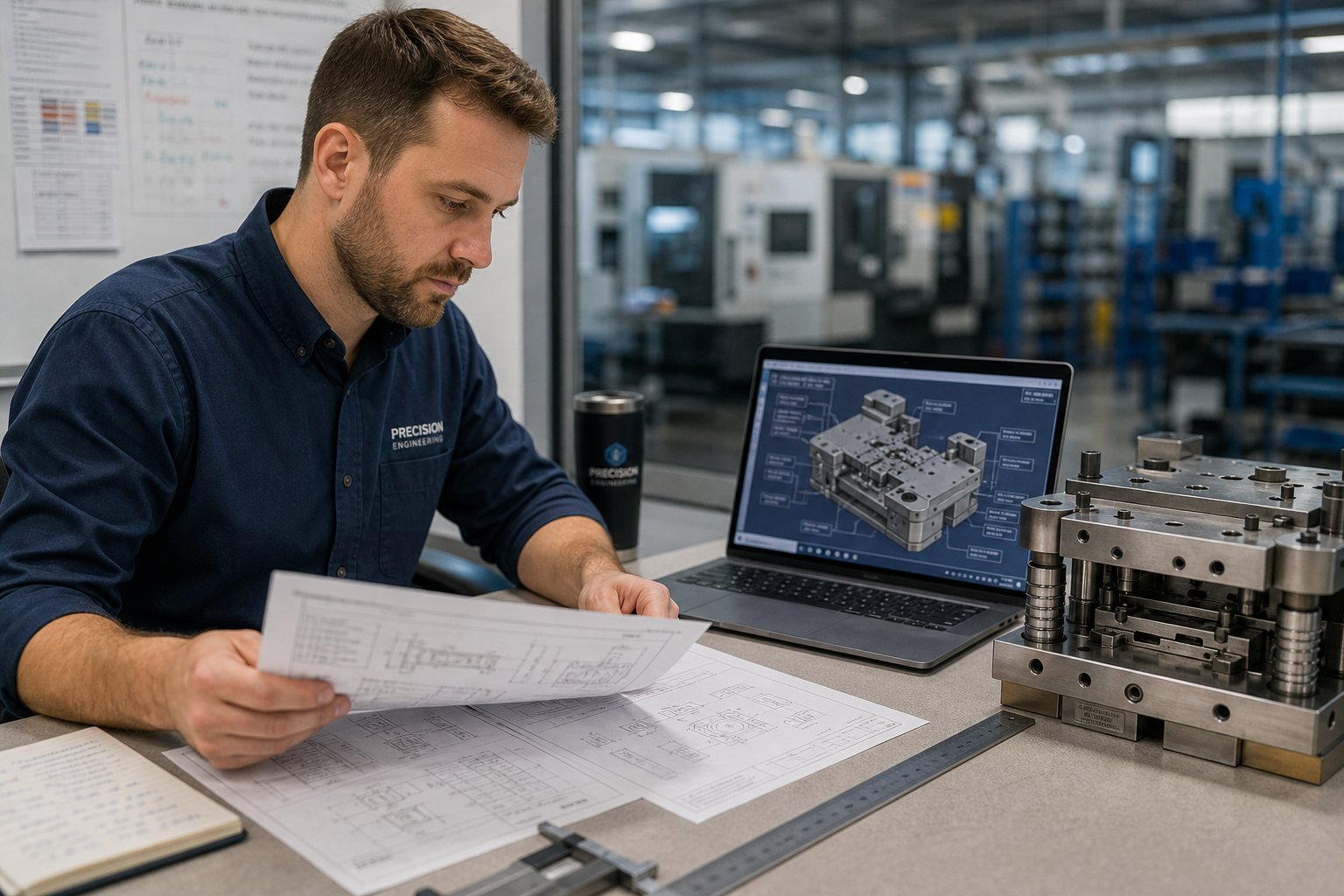
You've mapped the process, understood the economics, identified the certifications your industry demands, and built a framework for separating capable suppliers from risky ones. The remaining step is execution: turning that knowledge into a structured sourcing action plan that moves your project from evaluation to production-ready commitment.
Building Your Manufacturer Shortlist
Resist the impulse to send your RFQ to a dozen suppliers simultaneously. A targeted shortlist of three to five metal stamping die manufacturers, pre-qualified against your technical and quality criteria, produces better outcomes than a broad spray of inquiries. You'll get more thoughtful engineering feedback, faster turnaround on detailed quotes, and clearer signals about which shops genuinely want your program versus those casting a wide net.
Filter candidates by confirming they hold the certifications your application requires, operate presses in the tonnage and speed range your part demands, and have documented experience with your material. Then prioritize those offering in-house tooling and DFM collaboration, since those capabilities directly reduce iteration time and program risk.
Next Steps Toward Production-Ready Sourcing
Use this checklist as your action sequence from here forward:
- Validate volume justification - Confirm your projected annual quantities cross the breakeven threshold where progressive die tooling delivers lower per-part cost than alternatives. If you're below 50,000 units, revisit whether a simpler method serves you better.
- Lock material and tolerance specs - Finalize your substrate, thickness, and critical dimensions before engaging suppliers. Ambiguity here generates vague quotes and invites misalignment later.
- Identify required certifications - Match your industry's regulatory environment to the appropriate quality standard (ISO 9001 baseline, IATF 16949 for automotive, AS9100 for aerospace, ISO 13485 for medical). Eliminate any supplier that lacks yours.
- Build a criteria-weighted shortlist - Score candidates against the evaluation framework: in-house tooling, press capability, material experience, DFM support, secondary operations, and capacity headroom.
- Request DFM review before committing - Share your CAD data and ask shortlisted suppliers for manufacturability feedback. The quality of their DFM response tells you more about engineering depth than any brochure.
- Require a pilot production run - Before authorizing full-rate production, insist on a controlled sample run with dimensional verification and process capability data. This is your final checkpoint before scale.
For procurement teams and production engineers sourcing progressive stamping dies for high-volume metal parts requiring multi-station forming and tight repeatability, a progressive stamping company with integrated capabilities from die design through scalable mass production streamlines the entire process. Manufacturers like YICHEN offer that end-to-end approach, covering high speed progressive die stamping tooling development and volume production under one operation. Consider them alongside other qualified suppliers identified through the criteria-based evaluation outlined above.
The goal isn't to find the cheapest quote. It's to find the progressive die metal stamping partner whose engineering culture, quality infrastructure, and production capacity align with your program's full lifecycle. Ask the hard questions early, verify claims with data, and let your evaluation framework do the filtering. The right manufacturer will welcome that scrutiny because their capabilities speak clearly under it.
Frequently Asked Questions About Progressive Die Stamping Manufacturers
1. What is the minimum order volume for progressive die stamping to be cost-effective?
Progressive die stamping typically becomes economically viable at annual volumes of 50,000 to 100,000 units or more. Below this threshold, simpler methods like single-hit stamping or CNC laser cutting often deliver better per-part economics because they require less upfront tooling investment. For ultra-simple part geometries, some manufacturers may justify progressive tooling at 30,000 to 50,000 units. The key is requesting a breakeven analysis from your supplier that factors in projected volumes, expected tool life, and any secondary operations to determine exactly where the investment pays off for your specific project.
2. How long does it take to build a progressive stamping die?
Complex progressive stamping dies with 10 or more stations typically require 12 to 20 weeks for design, machining, assembly, and tryout. Simpler dies with fewer stations may come in faster, but rushing the validation phase often seeds quality problems into production. Manufacturers with in-house tooling capabilities, including wire EDM, CNC machining, and surface grinding, can often compress timelines compared to shops that outsource die construction. Companies like YICHEN that handle die design through production under one roof eliminate handoff delays between separate tool shops, which can shave weeks off the total lead time.
3. What certifications should a progressive die stamping manufacturer have?
The required certifications depend on your industry. ISO 9001 serves as the baseline quality management standard every supplier should hold. Automotive applications require IATF 16949, which adds defect prevention and supply chain controls. Aerospace programs demand AS9100 for configuration management and counterfeit part prevention. Medical device components need ISO 13485 for regulatory compliance and risk management. Beyond certifications, verify that suppliers can produce PPAP (Production Part Approval Process) documentation, which provides data-backed proof that their process delivers conforming parts repeatably before mass production begins.
4. What materials can be used in progressive die stamping?
Common materials include carbon steel, stainless steel (300 and 400 series), copper, aluminum, brass, and beryllium copper. Each material behaves differently during stamping due to variations in hardness, ductility, and springback. For example, copper forms easily with minimal tool wear, making it ideal for electrical contacts, while stainless steel requires more forming stations and accelerates tool wear due to work hardening. Not all manufacturers handle all materials equally well, so verify that your prospective supplier has documented production experience with your specific substrate before committing to tooling.
5. How do I choose between progressive die stamping and transfer die stamping?
The choice depends on part size, geometry, and volume. Progressive die stamping excels for small-to-medium components with complex multi-feature geometry at very high volumes (50,000+ annually), running at speeds of 200 to 600+ strokes per minute. Transfer die stamping suits larger or deep-drawn parts that cannot remain attached to a carrier strip, typically at volumes of 25,000+ units per year but at slower cycle rates. Progressive dies consolidate all operations into one continuous strip-fed process, while transfer dies move individual blanks between separate stations using mechanical fingers. If your part fits on a strip and volume is high, progressive dies deliver lower per-part cost and faster throughput.


