


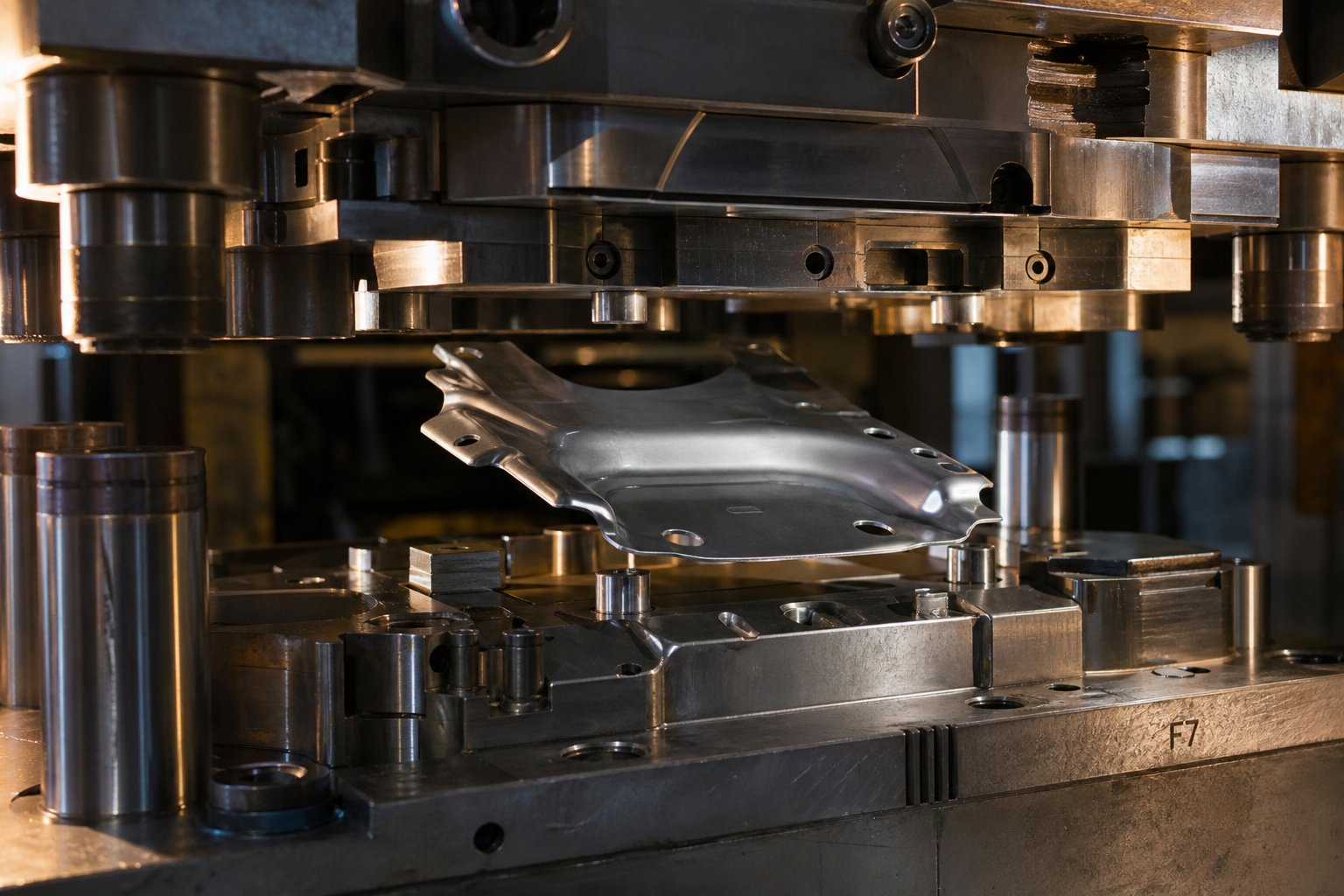
What Tool and Die Prototyping Means for Metal Stamped Parts
Imagine committing six figures to a production die only to discover the part springs back two degrees beyond tolerance on the first press hit. That scenario plays out more often than it should, and it is almost always preventable. Tool and die prototyping for metal stamped parts exists precisely to catch these issues before they become expensive problems.
Defining Tool and Die Prototyping
Tool and die prototyping for metal stamped parts is the engineering practice of designing, fabricating, and validating temporary or reduced-life dies to produce sample stamped components, confirming formability, dimensional accuracy, and material behavior before investing in full production tooling.
In practical terms, a metal stamping prototype is a physical part produced from a purpose-built die that mirrors the intended production geometry but uses less durable materials or simplified construction. The goal is not mass output. It is learning: verifying that the part forms correctly, meets dimensional targets, and behaves as predicted under real press conditions.
Why Prototyping Is a Separate Engineering Discipline
Prototype metal stamping is not just a smaller version of production. It is a distinct engineering discipline with its own design logic. Production tooling, often called hard tooling, uses premium tool steels like SKD11 or carbide inserts built to survive hundreds of thousands of press cycles. Prototype tooling, by contrast, prioritizes speed, adaptability, and information gathering over longevity.
Soft tooling made from aluminum or pre-hardened steel can be fabricated faster and modified more easily, making it ideal for iterating on geometry and testing material response. This flexibility allows engineers to explore design variations without the time and cost penalty of reworking hardened steel. The discipline centers on extracting maximum learning from minimum tooling investment.
Key Risks of Skipping the Prototype Phase
Bypassing prototype stamping and jumping straight to production dies introduces compounding risks:
- Costly die rework when tolerances are missed on first-article parts, with tryout and validation alone accounting for 10-15% of total die cost
- Delayed product launches while hardened steel is re-machined or scrapped
- Material waste from prototype stampings that could have been caught with a low-cost soft tool first
- Hidden design flaws such as stress points, material deformation, or fitment problems that only reveal themselves under actual forming conditions
When a progressive die averages $15,000 to $30,000 and complex transfer dies reach well beyond $500,000, the math favors spending a fraction of that budget on validation upfront. Prototyping is not a preliminary courtesy. It is risk engineering applied to sheet metal forming.
The real question is not whether to prototype, but how. The answer depends on part complexity, material choice, and the method used to build the die itself.
The Step-by-Step Tool and Die Prototyping Process
Every prototyping engagement follows a structured workflow, yet each stage generates feedback that can loop back and reshape earlier decisions. Understanding the full manufacturing stamping process from design receipt to validated parts helps you anticipate where iterations will occur and plan your timeline accordingly.
From Part Design to Prototype Die Layout
The stamping process begins well before metal touches a press. When a tooling partner receives your part design, the first action is a thorough design review. Engineers evaluate the 3D CAD model and 2D drawings for formability concerns: tight radii, deep draws, thin walls, and features that may be difficult to stamp in sheet metal. They flag potential issues early so corrections cost nothing more than a revised file.
From there, the CAD model is translated into a prototype die layout. This includes determining the number of stations (if using a progressive approach), strip layout, material feed direction, and blank size. The die layout accounts for how the stamping metal process will unfold stroke by stroke, anticipating where material flow, stretch, and compression will challenge the geometry.
Fabricating the Prototype Die
Die fabrication is where the concept becomes a physical tool. Depending on complexity and tolerance requirements, fabrication may involve CNC machining of die blocks, wire EDM for intricate profiles, or a combination of both. Wire EDM is particularly valuable for prototype dies because programs can be easily corrected to allow for efficient adjustments during iteration, and it achieves repeatability within 0.0002 inches once a program is established. Industrial metal stamping machining centers handle the roughing and shaping of die shoes, while EDM handles precision profiles and tight internal radii.
Here is the sequential workflow from start to sign-off:
- Design review and formability assessment of the incoming part model
- CAD preparation including strip layout, blank development, and die architecture
- Prototype die design with station sequencing and clearance calculations
- Die fabrication via CNC machining, wire EDM, or hybrid methods
- Die assembly, alignment verification, and press setup
- First-article stamping of initial sample parts
- Dimensional measurement, inspection, and comparison to specifications
- Iteration: die adjustments, re-stamping, and re-measurement
- Final validation and production tooling handoff
First-Article Stamping and Iteration Cycles
When you first run a prototype die, you are collecting data, not producing finished goods. The first-article parts reveal how the material actually behaves under forming pressure. Engineers measure each feature against the tolerance spec, looking for springback deviations, thinning at draw corners, or wrinkling in compression zones.
Rarely does a first attempt yield parts that meet every dimension. Iteration is built into the process. A die face might need re-machining to compensate for springback. A draw radius might require opening up to prevent cracking. Each cycle of stamping sheet metal, measuring, adjusting, and re-stamping narrows the gap between actual and target geometry. Expect two to four iteration loops on parts with moderate complexity.
Validation and Production Tooling Handoff
Final validation happens when prototype parts consistently meet dimensional and functional requirements across a small sample run. At this stage, the engineering team documents everything learned: actual springback values, optimal press parameters, material behavior notes, and any geometry changes made during iteration.
This data package becomes the blueprint for production tooling. Rather than starting from assumptions, the production die designer works from confirmed, empirically validated information. The handoff transforms prototyping knowledge into production confidence, and the choice of prototyping method directly shapes how much of that knowledge you can extract.
Prototyping Methods Compared and When to Use Each
Not all prototype dies are built the same way, and choosing the wrong method for your part can waste both time and budget. The right metal stamping tooling approach depends on a handful of variables: how complex your geometry is, what material and gauge you are forming, how tight your tolerances need to be, and how many sample parts you need before committing to production.
Here is a practical breakdown of the most common methods, what each excels at, and where each falls short.
Soft Tooling for Low-Volume Validation
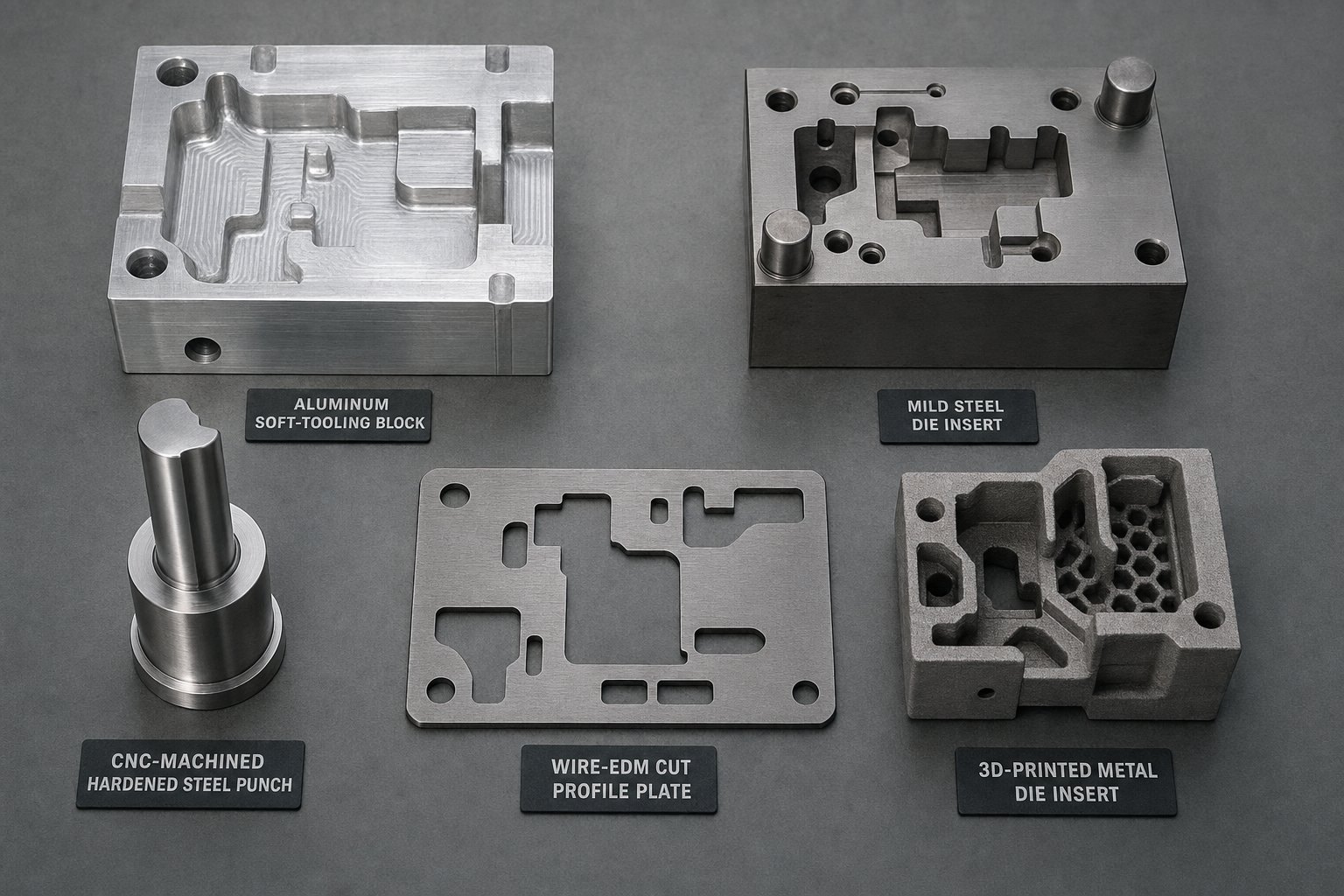
Soft tooling uses aluminum alloys (typically 6061 or 7075) or mild steel to fabricate die components. Because these materials machine quickly and cost less than tool steel, soft tooling delivers the fastest turnaround at the lowest upfront investment. The tradeoff is die life. Aluminum dies typically survive 500 to 5,000 hits before wear degrades part quality, making them suitable for early-stage validation rather than extended prototype runs.
Soft tooling works best when you need to verify basic formability, test a new strip layout, or confirm that a progressive die stamping process sequence produces the intended geometry. It is less suited for parts requiring tight tolerances below +/-0.05 mm, since softer die materials deflect more under press load and wear faster at cutting edges. For simple bends, shallow draws, and fourslide stamping geometries, though, soft tooling provides answers fast.
CNC-Machined and Wire EDM Prototype Dies
When your part demands closer tolerances or involves more complex forming operations, CNC-machined prototype dies in pre-hardened tool steel (often D2 or A2 at 45-55 HRC) bridge the gap between soft tooling and full production dies. These dies handle tighter clearances and resist wear longer, typically lasting 10,000 to 50,000 shots depending on material being formed and die hardness.
Wire EDM complements CNC machining for intricate internal profiles, sharp corners, and features that conventional milling cannot reach. Combining both processes within a single die build is common practice. Rapid prototyping equipment in modern tool rooms can produce these dies in two to four weeks, depending on complexity. This method suits parts with moderate to high geometric complexity where dimensional accuracy during prototyping must closely represent production conditions.
When 3D-Printed Die Inserts Make Sense
Additive manufacturing has entered the prototyping conversation, though its role remains specialized. Research at Oakland University demonstrated that coated 3D-printed die inserts can stamp 50,000 parts in 1-mm-thick DP980 ultra-high-strength steel with wear comparable to conventional D2 tool steel inserts. Both configurations produced parts in good surface condition throughout the run.
The primary advantage of 3D-printed inserts is geometric freedom. Complex die face contours that would require extensive CNC time or multiple EDM setups can be printed directly, reducing fabrication time for intricate shapes. The technology fits best for rapid prototyping metal stampings where die geometry is highly contoured and conventional machining would be cost-prohibitive. It is less practical for large flat die faces or simple geometries where CNC machining remains faster and more economical.
Matching Method to Part Characteristics
Choosing a prototyping method is ultimately a decision matrix. You balance speed against accuracy, cost against die life, and geometric complexity against fabrication capability. The table below consolidates these factors into a single reference framework:
| Method | Die Material | Typical Life (Shots) | Tolerance Capability | Lead Time Range | Best-Fit Use Case |
|---|---|---|---|---|---|
| Soft Tooling (Aluminum) | 6061/7075 Aluminum | 500 - 5,000 | +/- 0.08 - 0.13 mm | 1 - 2 weeks | Early formability checks, simple bends, low-volume validation |
| Soft Tooling (Mild Steel) | 1018/1045 Steel | 2,000 - 10,000 | +/- 0.05 - 0.10 mm | 2 - 3 weeks | Moderate geometry, thicker gauges, short prototype runs |
| CNC-Machined (Pre-Hardened Tool Steel) | D2/A2 at 45-55 HRC | 10,000 - 50,000 | +/- 0.025 - 0.05 mm | 2 - 4 weeks | Tight-tolerance parts, production-representative validation |
| Wire EDM Prototype Dies | D2/A2 Tool Steel | 10,000 - 50,000 | +/- 0.013 - 0.025 mm | 3 - 5 weeks | Intricate profiles, sharp internal corners, fine blanking |
| 3D-Printed Die Inserts | Maraging Steel / Tool Steel Powder | 5,000 - 50,000+ | +/- 0.05 - 0.10 mm | 1 - 3 weeks | Complex contoured surfaces, rapid iteration on geometry |
A few patterns emerge. If you are stamping thin aluminum or brass in simple bend geometries, soft tooling gets you answers in days. If your part involves a multi-station progressive die stamping process with tight positional tolerances, pre-hardened CNC-machined dies are worth the extra lead time. And if your geometry is so complex that machining costs spiral, 3D-printed inserts may actually be the faster and more economical path.
The method you choose also dictates how representative your prototype results will be. Softer die materials deflect differently, wear faster, and may not replicate the surface finish of hardened production tooling. That gap between prototype and production behavior matters most when material properties enter the picture, particularly how different metals respond to forming forces in ways that CAD models alone cannot fully predict.
Material Selection and Its Impact on Prototype Results
A die that forms low-carbon steel flawlessly may produce out-of-spec parts the moment you switch to stainless steel or aluminum. Each sheet metal stamping material carries its own personality under forming pressure: unique springback behavior, different tendencies toward galling, and varying rates of work hardening that alter how the part interacts with die surfaces stroke after stroke. Prototyping with the wrong material, or a convenient substitute, can generate misleading data that derails production tooling decisions.
How Material Properties Influence Prototype Die Design
When you design a prototype die, the stamping tool material choices and clearances must reflect the specific alloy you intend to run in production. Different metals flow, stretch, and compress in fundamentally different ways during cold sheet metal stamping. Mild steel is relatively forgiving: it has moderate yield strength, good ductility, and predictable behavior in draw operations. Stainless steel, by contrast, work-hardens rapidly, meaning it gets significantly stronger as you form it, requiring greater press tonnage and different clearance strategies. Aluminum alloys spring back more aggressively after forming and are prone to galling against uncoated die surfaces.
These differences affect every dimension of die design, from punch-to-die clearance and draw radius sizing to surface finish requirements and lubrication strategy. A prototype die built without accounting for material-specific behavior will produce parts that tell you very little about what production will actually look like.
Springback Behavior Across Common Stamping Metals
Springback is the tendency of sheet metal to partially return toward its original flat shape after the forming load is released. It happens because elastic recovery occurs alongside plastic deformation during bending. The magnitude of springback varies significantly by alloy and gauge thickness.
A comparative study on V-bending springback across aluminum alloy 6061-T6, stainless steel 304, and low-carbon steel found that low-carbon steel exhibits the least springback, followed by SS 304, with Al 6061-T6 springing back the most. The research also revealed that material thickness accounts for roughly 54% of the influence on springback magnitude, while material type contributes about 37%. Thinner sheets spring back more than thicker ones across all alloys tested.
What does this mean for prototyping? If your production part will be formed from 0.5 mm aluminum, your prototype die must be designed with overbend compensation specific to that alloy and gauge combination. Using a thicker gauge or a different alloy during prototyping skews your springback data and renders the iteration cycles less useful. The hot stamping process used in automotive applications addresses springback by forming at elevated temperatures where the material is more pliable, but for most cold-formed prototype work, compensation must be built into die geometry.
Why Prototype Material Must Match Production Intent
Imagine running your prototype die with mild steel because it is cheaper and easier to source, while your production intent is 304 stainless. The mild steel parts come out dimensionally perfect. You sign off on the die design and commit to production tooling. Then, when production starts with stainless, the parts spring back further, the die galls within a few hundred strokes, and wall thickness in draw corners deviates from spec. Every assumption validated during prototyping turns out to be unreliable.
This is why experienced tooling engineers insist on prototyping with the actual production-intent material at the correct gauge. The process of deep drawing is especially sensitive to material selection because compressive forces in the flange cause material thickening that varies by alloy. As MetalForming Magazine notes, in-plane compression during deep drawing increases sheet thickness in draw corners, and if die clearances are not adjusted for that specific material's thickening behavior, galling becomes inevitable.
Here are the key material-specific forming considerations you should evaluate during prototyping:
- Springback magnitude: Aluminum alloys and high-strength steels spring back significantly more than mild steel, requiring overbend compensation in die geometry
- Galling tendency: Stainless steels and aluminum are highly prone to adhesive wear against die surfaces, demanding polished tooling, proper clearances, and appropriate coatings or lubrication
- Work hardening rate: Austenitic stainless steels (304, 316) harden rapidly during forming, increasing required tonnage and changing material flow characteristics mid-stroke
- Surface sensitivity: Copper and brass show cosmetic marking easily, requiring mirror-polished die surfaces and controlled lubrication to avoid visible defects
- Thickness variation under load: Each alloy thickens and thins differently during draws, directly affecting punch-to-die clearance requirements
Gauge thickness compounds every one of these factors. A die designed with proper clearance for 1.5 mm low-carbon steel will pinch and gall if you form 2.0 mm stainless through it, because the thicker, harder material generates more friction and greater thickness increase in compression zones. Prototype tooling reveals these interactions physically, in a way that even well-calibrated CAD simulations can only approximate. The real forming environment introduces variables like temperature rise, lubrication breakdown, and micro-scale surface interactions that digital models struggle to capture fully.
This gap between simulation and reality is precisely why physical prototyping remains indispensable, even as computational tools grow more sophisticated.
CAE Simulation as a Pre-Prototyping Validation Step
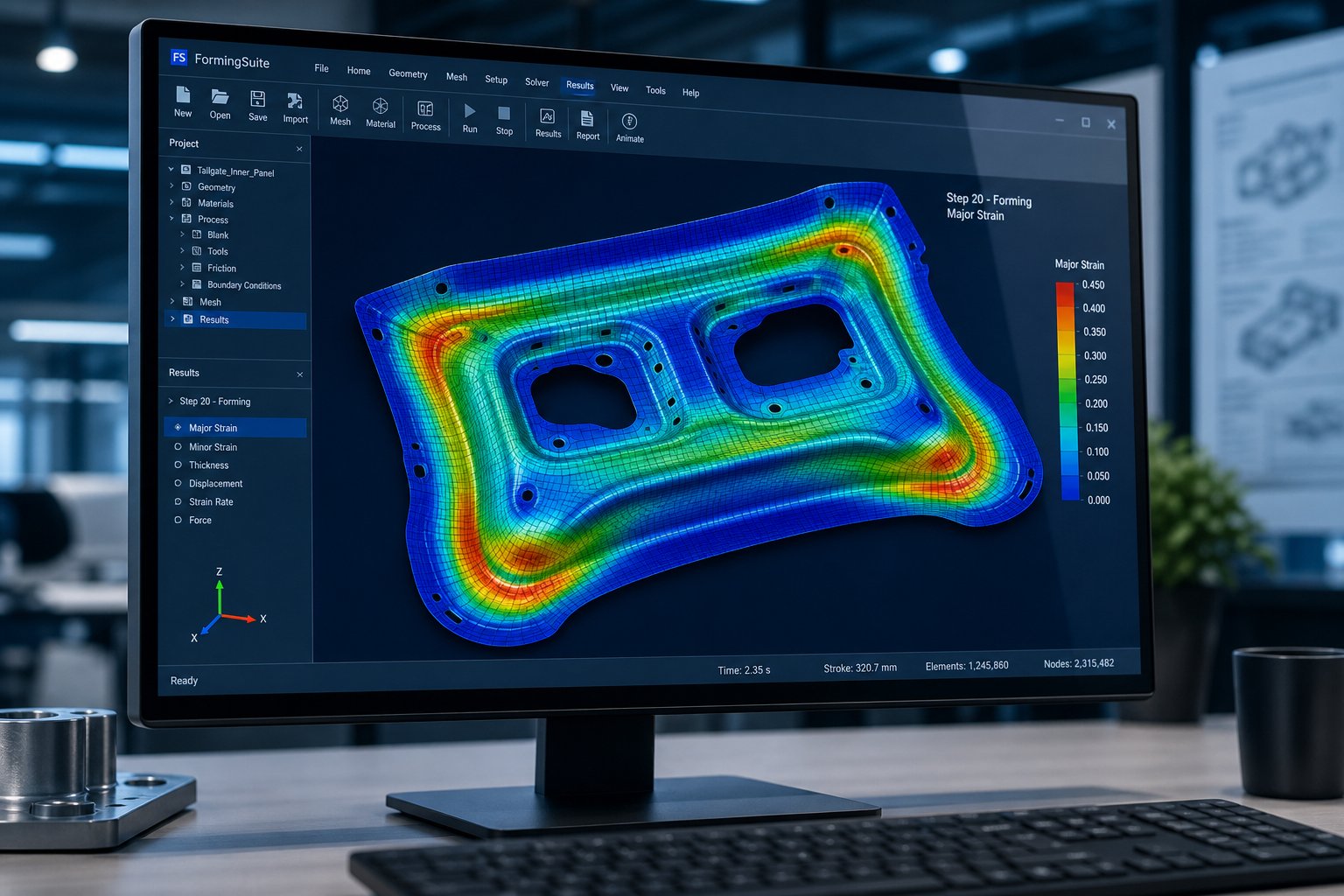
Sophisticated as it is, physical prototyping still costs real money and real time for every iteration cycle. What if you could eliminate one or two of those cycles before cutting any steel? That is exactly where CAE simulation fits into the workflow. Finite element analysis for sheet metal forming acts as a virtual proving ground, letting engineers test die designs, blank shapes, and process parameters digitally before committing to physical tooling. It does not replace hands-on prototype technology, but it dramatically narrows the window of uncertainty that the first physical die attempt must address.
What CAE Simulation Predicts Before Cutting Steel
Modern forming simulation software replicates the physical press shop environment with remarkable fidelity. The blank is modeled as a mesh of elements, the tooling geometry is defined as rigid surfaces, and the press stroke is simulated incrementally, calculating deformation at each time step. The result is a detailed map of how your sheet metal will behave under actual forming conditions.
According to AHSS Insights, these programs have proven accurate in predicting blank movement, strains, thinning within the blank, wrinkles, buckles, and forming severity as defined by conventional forming limit curves. Specifically, simulation identifies three categories of defects before any metal is formed:
- Thinning and splits: Excessive stretching in vertical walls or over tight radii causes thickness reduction. Thinning beyond roughly 20% signals high risk of cracking during actual stamping.
- Wrinkling and buckling: Compressive forces in flanges or unsupported regions cause ridges that compromise part quality. Simulation reveals where blank holder pressure or draw bead placement needs adjustment.
- Springback deviation: Elastic recovery after forming is predicted directionally, showing which features will move out of tolerance and by approximately how much.
For technical stamping applications involving complex geometries or advanced materials, these predictions are invaluable. They allow die designers to adjust radii, reposition draw beads, or modify blank shape before any fabrication begins.
Simulation Outputs That Guide Prototype Die Design
A well-executed forming simulation produces several deliverables that directly inform how the prototype die is designed and built:
- Forming limit diagrams (FLD): Plot major and minor strains at every point in the blank against the material's forming limit curve, showing exactly where the part is safe, marginal, or at risk of failure
- Thickness distribution maps: Visualize thinning and thickening across the entire part, highlighting regions where die clearances may need adjustment or where material will pinch
- Springback predictions: Show post-forming shape deviation from nominal geometry, guiding overbend compensation built into die surfaces
- Blank shape optimization: Determine the ideal starting blank contour so the formed part requires minimal trimming and material usage is efficient
- Press load curves: Estimate required tonnage through the stroke, ensuring the selected press has adequate capacity for prototyping
These outputs serve as a blueprint for the prototype die designer. Rather than relying purely on experience and rules of thumb, the engineer starts with quantified predictions about where problems will occur. FEA tools like AutoForm, PAM-STAMP, and LS-DYNA generate these results in hours or days, far faster than a physical tryout cycle. The practical benefit for rapid prototyping metal parts is fewer surprises on the first press hit.
Limitations of Simulation and Why Physical Prototyping Remains Essential
Simulation is powerful, but it operates on idealized inputs. The metal forming industry recognizes that any simulation is only as good as the data used to generate predictions. Material cards may not capture batch-to-batch variation. Friction models approximate real lubrication behavior. And as AHSS Insights notes, prediction of local formability concerns like sheared edge stretchability remains lacking due to the difficulty of modeling all production edge effects.
Springback prediction is another area where simulation provides directional guidance but not always absolute accuracy. Users report that simulation reduces die recuts from twelve or more to three or four, a significant improvement but not elimination. The residual gap between virtual and physical results is exactly what prototype tooling resolves.
Think of the relationship this way: simulation eliminates the clearly bad ideas and narrows your design to a high-probability starting point. Physical prototyping then confirms what simulation predicted, catches what it missed, and generates the empirical data needed to finalize production tooling with confidence. Together, they compress timelines and reduce iteration costs far more effectively than either method alone.
The real payoff of combining simulation with physical prototyping surfaces during design-for-manufacturability review, where prototype results reveal issues that neither CAD geometry nor virtual models anticipated, and feed directly back into part design revisions.
The DFM Feedback Loop That Saves Production Tooling Costs
Simulation narrows the window. Prototype tooling narrows it further. But the highest-value outcome of prototyping is not simply a dimensionally correct part. It is the design knowledge that flows backward from the press shop into your CAD model. Every prototype stamping run generates empirical evidence about what works, what fails, and what needs to change in the part design itself, not just the tooling. This feedback loop between physical prototype results and sheet metal stamping design revisions is what separates a single expensive tryout from a systematic path toward a producible, cost-effective production part.
How Prototype Results Drive Design Revisions
When prototype parts come off the press, they carry information no simulation or drawing review can fully predict. A corner radius that looked adequate in CAD shows micro-cracking under a microscope. A flange intended to be 12 mm tall bulges at the transition because material flow was not uniform. A hole near a bend line distorts into an oval shape because it was positioned too close to the deformation zone.
Each of these findings triggers a specific design revision. The engineer does not simply ask the die maker to fix the tooling. Instead, the part geometry itself gets updated: a radius opens up from 1.0T to 1.5T, a flange height is reduced by 2 mm, a hole is repositioned 4 mm further from the bend line. These changes propagate through the assembly model, and the updated design is re-validated in the next prototype iteration.
This is the DFM feedback loop in action. Physical results reveal what the design actually needs to look like for reliable stamping, and the part drawing converges toward a geometry that both meets functional requirements and forms cleanly. The loop typically runs two to four cycles on moderately complex parts before reaching a stable, producible design.
Common DFM Findings During Prototype Stamping
Certain issues surface repeatedly across stamping prototyping projects, regardless of industry or part complexity. Recognizing these common patterns helps engineers anticipate revisions and build tolerance for iteration into their timelines.
- Minimum bend radii violations: Internal radii specified below 1.0 to 1.5 times material thickness cause cracking or excessive thinning at the outer fiber, particularly in stainless steel and high-strength alloys
- Feature spacing conflicts: Holes, slots, or embossments positioned closer than 2 times material thickness from a bend line, edge, or adjacent feature distort during forming because the surrounding material cannot support the deformation
- Material thinning at draw corners: Deep draws concentrate strain at punch radii, reducing wall thickness below minimum spec and creating weak points that may fail under service loads
- Tolerance stack-up issues: Multiple formed features accumulating dimensional variation beyond what the assembly can absorb, requiring datum restructuring or the addition of adjustment features like slotted holes
- Draft angle insufficiency: Vertical walls without adequate relief angle cause the part to lock onto the punch during retraction, damaging both part and tooling
- Bypass notch sizing errors: Negative and positive bypass notches in sheet metal forming stamping dies control strip progression and prevent material buckling between stations, but incorrectly sized notches can either bind the strip or allow misregistration, creating dimensional drift across a progressive die sequence
The purpose of bypass notches in stamping dies becomes especially apparent during prototype runs where strip feeding issues surface that were not obvious in the die layout. Early physical validation of bypass notches sheet metal forming behavior saves significant rework on production tooling, where strip control problems multiply across high-speed press cycles.
Collaborative DFM Review with Your Tooling Partner
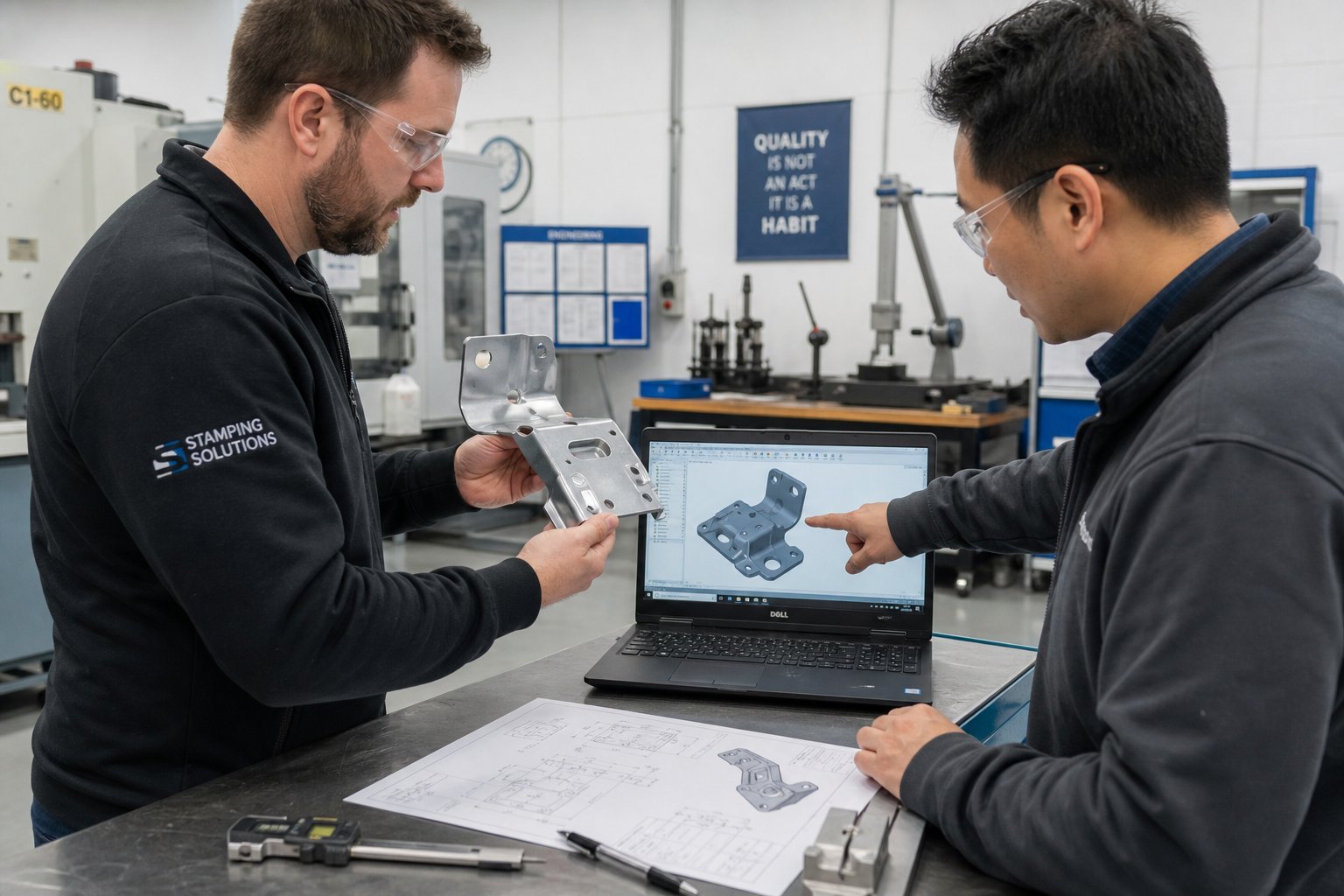
The feedback loop works fastest when the design engineer and the tooling partner are reviewing prototype results together, not passing reports back and forth through email chains. Collaborative DFM review means both parties sit at the same table, whether physical or virtual, and walk through each deviation with a shared understanding of what is a tooling fix versus what requires a part design change.
This is where modern prototyping partners differentiate themselves. A shop that simply stamps your part and hands you a measurement report leaves you to interpret the results alone. A partner that integrates DFM expertise directly into the prototyping cycle identifies root causes faster and proposes design modifications that solve forming problems without compromising part function. YICHEN, for example, structures their workflow around rapid CNC prototyping with integrated DFM feedback, combining prototype fabrication with engineering review so that each iteration cycle produces both parts and actionable design guidance.
Effective collaborative DFM review follows a practical pattern. The tooling engineer identifies the forming defect and explains its mechanical cause. The design engineer evaluates whether the affected feature can be modified without impacting fit or function. Together, they converge on a revision that satisfies both manufacturability and performance. A few key stamping design tips accelerate this process: always dimension critical features from a common datum, allow flexibility in non-functional radii, and specify material grain direction on the drawing so the die designer can orient bends for maximum formability.
The DFM feedback loop does more than improve the current part. It builds institutional knowledge about what works in stamping and what does not. Every finding documented during prototyping becomes a design guideline for the next project, compounding returns over time. And for procurement managers evaluating the cost of prototype iterations, consider this: each DFM revision caught during prototyping avoids a production die modification that could cost 5 to 20 times more once hardened tooling is built.
With DFM-validated geometry in hand, the next practical question is quantifying the investment: how much does prototype tooling actually cost relative to production tooling, and how do you measure the return?
Cost and Timeline Context for Prototype Tooling Decisions
DFM findings tell you what to fix. The next question is practical: what does that validation actually cost, how long does it take, and when does the math justify the spend? These are the questions procurement managers and design engineers ask most often, yet concrete answers are surprisingly hard to find. The reality is that prototype tooling investment scales with how representative you need the results to be, and the right choice depends on your target metal stamping production volume.
Relative Cost of Prototype vs Production Tooling
Prototype tooling typically runs between 10% and 35% of equivalent production tooling cost, depending on method and complexity. A soft aluminum die for a simple bracket might cost a few thousand dollars, while a fully hardened progressive production die for the same part could reach $25,000 to $50,000. The gap widens further on complex transfer dies, where production tooling can exceed $500,000 and a representative prototype die still stays under $100,000.
Why such a wide range? Prototype dies trade longevity for speed and adaptability. They skip heat treatment steps, use less expensive materials, and simplify features that only matter at high-volume cycle rates. You are paying for enough die life to validate your design, not to survive a million press strokes. That tradeoff is precisely what makes prototype metal parts economically viable as a risk-reduction investment rather than a production expense.
Lead Time Expectations by Prototyping Method
Lead time tracks closely with die material and fabrication complexity. Soft tooling requires a lower investment and shorter lead time than hard tooling because softer materials machine faster and do not need heat treatment or extensive grinding. When modifications are needed, you return to production sooner with soft tooling since rework on unhardened material is straightforward.
Here is what to expect across common approaches:
- Soft tooling (aluminum): 1 to 2 weeks from design approval to first rapid prototype parts off the press
- Soft tooling (mild steel): 2 to 3 weeks, slightly longer due to material hardness and machining time
- CNC-machined pre-hardened tool steel: 2 to 4 weeks, with additional time for heat treatment and surface finishing
- Wire EDM prototype dies: 3 to 5 weeks for intricate geometries requiring multiple EDM setups
- 3D-printed die inserts: 1 to 3 weeks, with build time dependent on insert volume and post-processing requirements
Each iteration cycle adds roughly 3 to 7 days depending on the scope of die modifications. Budget two to four iteration loops for moderately complex parts, which means your total prototyping timeline from kickoff to validated parts typically falls between 4 and 10 weeks.
ROI of Prototyping vs Skipping to Production Dies
The financial case for prototyping rests on a simple principle. The cost of fixing a design error increases tenfold at every stage of production. If correcting a geometry issue costs $500 during prototype iteration, that same correction costs $5,000 once production tooling is cut, and $50,000 or more if defective parts reach assembly lines or customers. Prototyping is the barrier that stops this exponential cost climb.
A practical ROI formula for stamped part prototyping capabilities looks like this: (Cost of Avoided Production Die Rework + Value of Faster Launch) divided by Total Prototyping Investment. When a single production die modification runs $8,000 to $20,000 in re-machining, re-hardening, and re-validation, avoiding even one such modification through prototyping often pays for the entire prototype tooling program.
The table below consolidates cost, lead time, and volume guidance into a single decision framework:
| Prototyping Method | Relative Cost (% of Production Tooling) | Typical Lead Time | Target Production Volume |
|---|---|---|---|
| Soft Tooling (Aluminum) | 5% - 15% | 1 - 2 weeks | Low volume: under 10,000 parts |
| Soft Tooling (Mild Steel) | 10% - 20% | 2 - 3 weeks | Low to mid volume: up to 50,000 parts |
| CNC-Machined (Pre-Hardened Steel) | 15% - 30% | 2 - 4 weeks | Mid to high volume: 10,000 - 500,000+ parts |
| Wire EDM Prototype Dies | 20% - 35% | 3 - 5 weeks | Mid to high volume: precision-critical applications |
| 3D-Printed Die Inserts | 10% - 25% | 1 - 3 weeks | Any volume: complex geometry validation |
A pattern emerges from the volume-based decision logic: for low-volume production under 10,000 parts, soft tooling or alternative methods are often more cost-effective than investing in durable hard tooling. For mid-volume runs between 10,000 and 100,000 parts, the cost per part justifies more durable prototype dies that closely mirror production conditions. For high-volume programs exceeding 100,000 parts, the prototype tooling investment becomes a rounding error compared to production die costs, and the priority shifts entirely toward accuracy and representativeness of results.
Ultimately, the question is not whether you can afford to prototype. It is whether you can afford not to. A prototyping spend that represents 10% to 30% of production tooling cost routinely prevents rework bills that exceed the original tooling budget entirely. The savings compound further when you consider that validated prototype data feeds directly into production die design, eliminating guesswork and reducing tryout cycles on hardened tools.
Cost and timeline frame the business decision. But once you have prototype parts in hand, a different challenge emerges: how do you evaluate them rigorously enough to trust that production tooling built from these results will perform as expected?
Evaluating and Qualifying Prototype Stamped Parts
You have prototype parts in hand. Measurements are printed on a first-article report. But here is the question that trips up even experienced teams: how do you know these results are good enough to greenlight production tooling? A stamped part produced from a soft prototype die on a tryout press behaves differently than the same geometry formed in hardened tooling at production speed. Understanding what to measure, what acceptance criteria to apply at each stage, and how to bridge the gap between prototype and production data is what turns raw measurements into reliable engineering decisions.
Inspection Methods for Prototype Stamped Parts
The inspection approach you choose depends on what you need to learn. Early iteration cycles call for speed and broad coverage. Final validation demands precision and traceability. Most prototype stamping programs use a combination of methods, each suited to a different question.
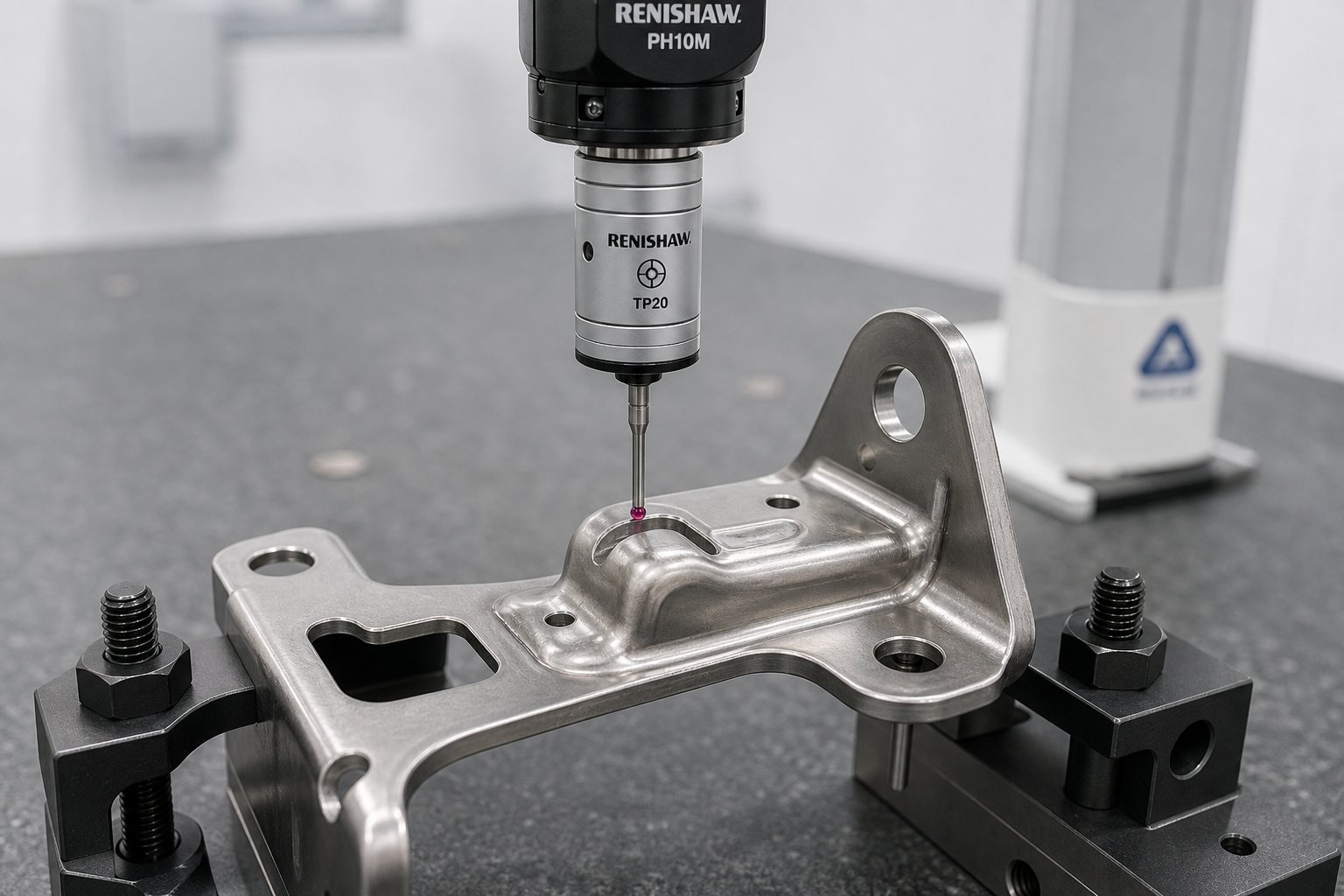
- Coordinate Measuring Machine (CMM): The standard for high-precision single-point measurement. CMMs measure individual features like hole positions, bend angles, and profile dimensions with accuracy down to a few microns. Best for final validation and GD&T conformance checks where traceability to calibration standards matters.
- 3D optical scanning (laser or structured light): Captures full-surface geometry in minutes, generating a point cloud that can be compared directly against the CAD model. 3D laser scanning excels at springback analysis, trimming line inspection, and identifying surface deviations across the entire part rather than just discrete points. Particularly valuable during iteration when you need to see the complete deformation picture fast.
- Go/no-go gauges: Functional gauges that verify whether critical features such as hole diameters, slot widths, or formed profiles fall within tolerance bands. They provide fast pass/fail answers on the shop floor without requiring a metrology lab, making them ideal for checking parts between iteration cycles.
- Optical comparators and vision systems: Useful for inspecting flat profiles, edge conditions, and burr height on prototype metal stampings. They offer quick 2D comparison against tolerance overlays and work well for features that CMMs struggle to probe, like thin edges or sharp corners.
- Functional fit testing: Assembling the stamped part into its mating components or fixtures to verify fitment, clearance, and interface geometry. No dimensional report replaces this test for confirming that the part actually works in its intended environment.
A practical pattern for stamping in manufacturing prototyping looks like this: use 3D scanning during early iterations to identify broad trends and springback patterns across the whole part, switch to CMM measurement for final validation of critical datums and GD&T callouts, and use go/no-go gauges for quick checks between press runs when you only need to confirm a specific adjustment landed where expected.
Acceptance Criteria During Iteration vs Final Validation
One of the most common mistakes during prototyping is applying production-level acceptance criteria to early iteration parts. When you are on your first or second die tryout, the purpose is learning, not qualifying. Holding prototype parts to final production tolerances at this stage leads to frustration and unnecessary rework cycles that slow the project rather than accelerating it.
During iteration cycles, experienced teams apply relaxed criteria focused on trend assessment rather than absolute conformance. The questions you ask are directional: Is the springback moving in the predicted direction? Is the thinning at the draw corner improving compared to the last iteration? Is the hole distortion decreasing as we move the feature further from the bend line? If the trend is converging toward target, the iteration is working even if individual dimensions remain outside final spec.
Final validation applies different rules. At this stage, parts must meet the drawing tolerances consistently across a sample of at least 5 to 10 consecutive hits from the prototype die. Critical dimensions, particularly those governing fit and function in the assembly, must fall within production-equivalent bands. Non-critical features can carry slightly relaxed tolerances provided you document the expected improvement when transitioning to hardened production tooling with tighter clearances and more stable die surfaces.
A simple framework distinguishes the two phases:
| Criteria | During Iteration | Final Validation |
|---|---|---|
| Tolerance band | 1.5x to 2x nominal tolerance | Nominal drawing tolerance |
| Sample size | 1 - 3 parts per adjustment | 5 - 10 consecutive parts |
| Focus | Trend direction and rate of improvement | Absolute conformance and repeatability |
| Documentation | Deviation notes, comparison to prior iteration | Full first-article inspection report with GD&T |
| Decision outcome | Continue iterating or change approach | Approve for production tooling design |
Interpreting Prototype Results for Production Projections
Even when final validation parts meet drawing tolerances, prototype results do not perfectly predict production output. Several factors create a systematic gap between prototype and production part quality that you need to account for when projecting forward.
Prototype dies wear faster because they use softer materials. As a soft aluminum or pre-hardened steel die accumulates hits, cutting edges dull, forming surfaces develop wear tracks, and clearances open up. Parts produced at the end of a prototype run may show more burr, slightly larger holes, or reduced dimensional consistency compared to the first hits. Production tooling in fully hardened D2 or carbide-inserted dies holds tighter dimensions over far longer runs.
Press differences also matter. Prototype dies often run on tryout presses with different tonnage capacity, stroke speed, and shut height than the production press. Speed affects material behavior, particularly for rate-sensitive alloys. A part formed at 30 strokes per minute during prototyping will behave slightly differently at 120 strokes per minute in production because of thermal buildup in the die and strain-rate effects in the material.
To account for this gap, document your prototype results alongside the conditions that produced them. Record press speed, tonnage, lubrication type, die temperature during the run, and the number of hits already on the die at the time of measurement. This context allows the production die designer to anticipate which dimensions will tighten (better die precision), which will shift (different press dynamics), and which need monitoring during production die tryout.
Sheet metal stamping equipment used in production also introduces variables like coil-fed material variation, automatic lubrication systems, and in-die sensing that the prototype environment may not replicate. Flagging these differences in your validation documentation prevents false confidence. You are not claiming the prototype represents production exactly. You are documenting what you learned and what remains to be confirmed during production die tryout.
Thorough documentation of prototype results creates the bridge to production. When every measurement is paired with process context, the production tooling designer works from real data rather than assumptions. That data package, combining inspection results, iteration history, and process conditions, becomes the foundation for choosing the right production partner and ensuring the transition from validated prototype to reliable production output happens without backtracking.
Transitioning to Production and Choosing the Right Partner
Validated prototype data, detailed inspection reports, and a DFM-refined part design sit in your project folder. The engineering risk is largely retired. What remains is execution: converting everything you learned during prototyping into production tooling that performs reliably at volume. This transition is where projects either accelerate smoothly or stall, and the difference almost always traces back to who you partnered with for prototyping and whether that partner can carry the knowledge forward into production.
What to Look for in a Prototyping Partner
Not every tool shop that can cut a die is equipped to support the full prototyping-to-production arc. The ideal partner combines fabrication capability with engineering judgment, fast turnaround with methodical documentation, and prototyping agility with production-scale thinking. When evaluating industrial metal stampings solutions providers, look for these criteria:
- Integrated rapid CNC prototyping and sheet metal fabrication under one roof: Partners like YICHEN's rapid prototyping services combine CNC machining, sheet metal fabrication, and early DFM feedback in a single workflow, eliminating handoff delays between separate vendors and keeping institutional knowledge intact across iteration cycles
- In-house DFM expertise embedded in the prototyping process: Your partner should not just stamp parts and hand you a measurement report. They should identify root causes of forming issues, propose design revisions, and help you converge on a producible geometry faster
- Clear communication on iteration expectations: A credible partner sets realistic expectations upfront about how many iteration cycles to budget, what each cycle costs, and what triggers a scope change versus a standard adjustment
- Prototype-to-production continuity: The shop that prototypes your part should either build your production tooling or transfer a complete data package (springback values, press parameters, material notes, die modification history) to whoever does
- Material sourcing capability for production-intent alloys: You need prototype parts stamped from the actual production material at correct gauge. A partner with established supply channels avoids delays sourcing specialty alloys
- Inspection and documentation infrastructure: CMM capability, 3D scanning, and structured first-article reporting ensure that prototype findings translate into actionable production tooling inputs rather than anecdotal shop-floor observations
The common thread across these criteria is continuity of knowledge. Every iteration cycle during prototyping generates insights about how your part behaves under real forming conditions. When that knowledge stays within a single organization from rapid prototype sheet metal fabrication through production die design, nothing gets lost in translation between vendors.
Ensuring a Smooth Prototype-to-Production Transition
The handoff from validated prototype to production tooling commitment should feel like a continuation, not a restart. A few practical steps make this happen without backtracking:
First, lock your part design before production tooling kickoff. The DFM feedback loop should have converged on a stable geometry during prototyping. If you are still iterating on part design when production tooling fabrication begins, you are inviting the exact rework costs that prototyping was meant to prevent.
Second, transfer the full process context alongside dimensional data. Production die designers need more than a final inspection report. They need the iteration history: what failed, what was adjusted, what springback compensation was applied, what press tonnage and speed produced conforming parts. This context shapes production die design decisions around heat treatment specifications, surface finish requirements, and clearance strategies.
Third, define which prototype findings require production tooling changes versus which will self-correct with harder die materials and faster press speeds. Some dimensional deviations observed in soft prototype tooling disappear when production dies are built from fully hardened steel with tighter clearances. Others persist or shift. Your prototyping partner's experience with rapid parts prototyping across similar geometries and materials helps distinguish the two.
Taking the Next Step Toward Validated Stamped Parts
The decisions you face distill into a concise sequence: select the prototyping method that matches your part complexity and tolerance requirements, insist on production-intent material from the first stamping run, leverage simulation to reduce physical iteration cycles, use DFM review to refine part geometry before committing to hardened tooling, and choose a partner whose capabilities span the full arc from prototype to production.
Skipping any of these steps does not save time. It shifts cost and risk downstream where corrections are exponentially more expensive. Tool and die prototyping for metal stamped parts is not overhead. It is the engineering discipline that turns uncertain designs into production-ready geometry with quantified confidence. The investment is small relative to production tooling. The return is measured in avoided rework, faster launches, and parts that work right the first time production presses start running.
Frequently Asked Questions About Tool and Die Prototyping for Metal Stamped Parts
1. How much does prototype tooling cost compared to production tooling?
Prototype tooling generally costs between 10% and 35% of equivalent production tooling, depending on the method chosen. Soft aluminum dies for simple geometries may run as low as 5% to 15% of production die cost, while CNC-machined pre-hardened steel prototype dies with tighter tolerances can reach 20% to 35%. The investment is justified because a single production die modification typically costs $8,000 to $20,000, meaning one avoided rework cycle often pays for the entire prototype tooling program.
2. What is the typical lead time for prototype stamping dies?
Lead times range from 1 to 5 weeks depending on the prototyping method. Soft aluminum tooling delivers the fastest turnaround at 1 to 2 weeks. Mild steel soft tooling takes 2 to 3 weeks, CNC-machined pre-hardened tool steel requires 2 to 4 weeks, and wire EDM prototype dies need 3 to 5 weeks for intricate geometries. Each iteration cycle adds approximately 3 to 7 days. Most projects reach validated parts within 4 to 10 weeks total, including two to four iteration loops for moderately complex parts.
3. Why should prototype material match the production-intent alloy?
Different metals exhibit unique springback behavior, galling tendencies, and work hardening rates that directly affect dimensional outcomes. If you prototype with mild steel but intend to produce in stainless steel, the validated die geometry will perform differently under production conditions because stainless springs back more, hardens rapidly during forming, and galls against uncoated die surfaces. Testing with the actual production alloy and gauge ensures that every iteration cycle generates meaningful data that transfers reliably to production tooling design.
4. Can CAE simulation replace physical prototyping for stamped parts?
No. CAE simulation and physical prototyping serve complementary roles. Simulation predicts thinning, wrinkling, and springback before cutting steel, narrowing the design window and eliminating clearly unworkable approaches. However, simulation relies on idealized inputs and cannot fully capture batch-to-batch material variation, real-world friction conditions, or edge-condition effects. Physical prototyping confirms simulation predictions, catches issues digital models miss, and generates empirical data needed to finalize production tooling. Together, they reduce iteration cycles from twelve or more down to three or four.
5. How do you evaluate whether prototype stamped parts are ready for production tooling commitment?
Final validation requires parts that consistently meet drawing tolerances across 5 to 10 consecutive hits from the prototype die. Critical dimensions governing fit and function must fall within production-equivalent tolerance bands. Engineers use CMM measurement for GD&T conformance, 3D optical scanning for full-surface springback analysis, and functional fit testing with mating components. Results should be documented alongside process conditions including press speed, tonnage, lubrication type, and die hit count so the production tooling designer can account for systematic differences between prototype and production environments.


