


What Carbide Stamping Dies Are and Why They Matter
When a stamping die wears out long before its expected service life, the problem usually traces back to decisions made before the die ever touched a press. Understanding what you're working with is the first step toward fixing that.
Definition and Core Composition of Carbide Stamping Dies
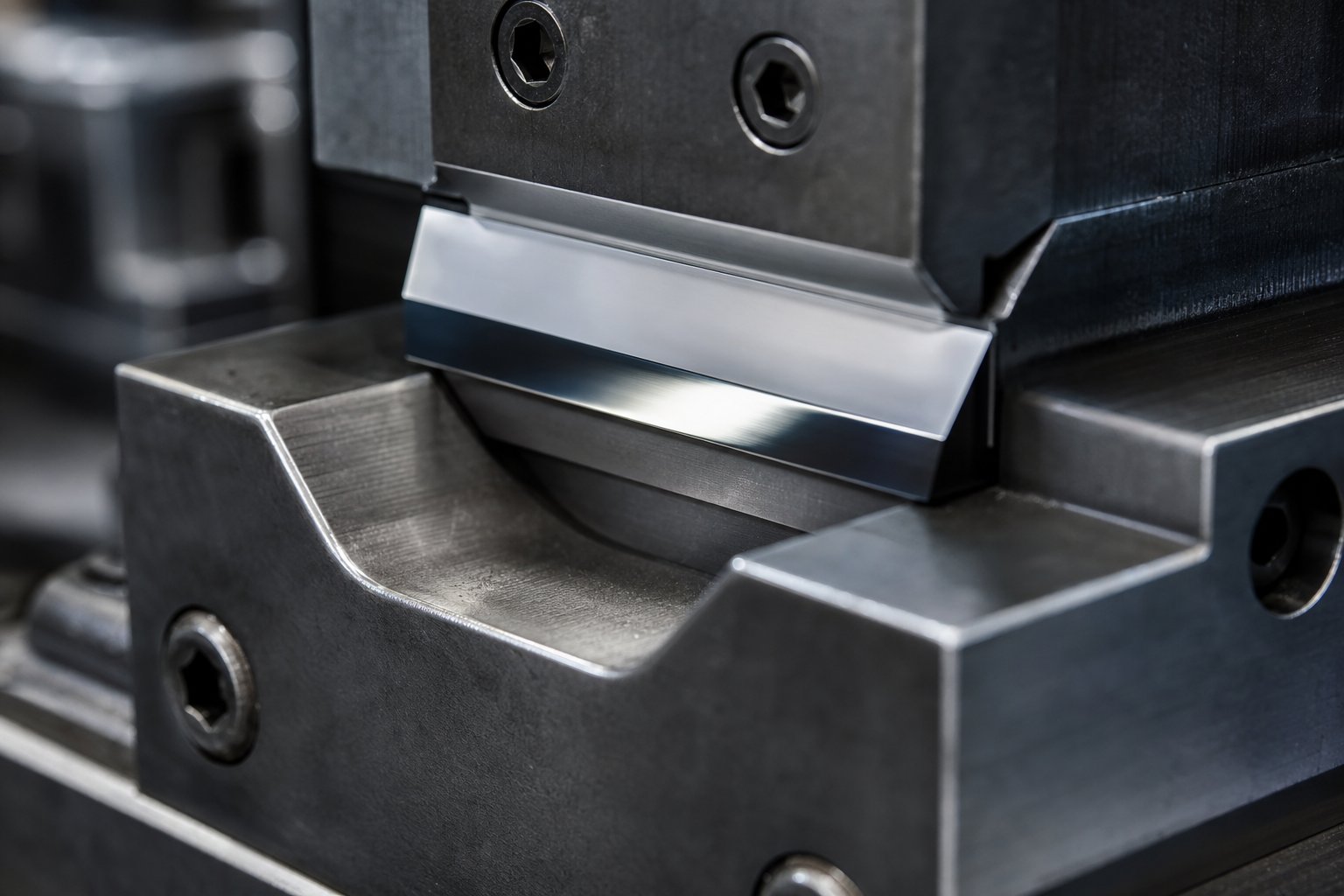
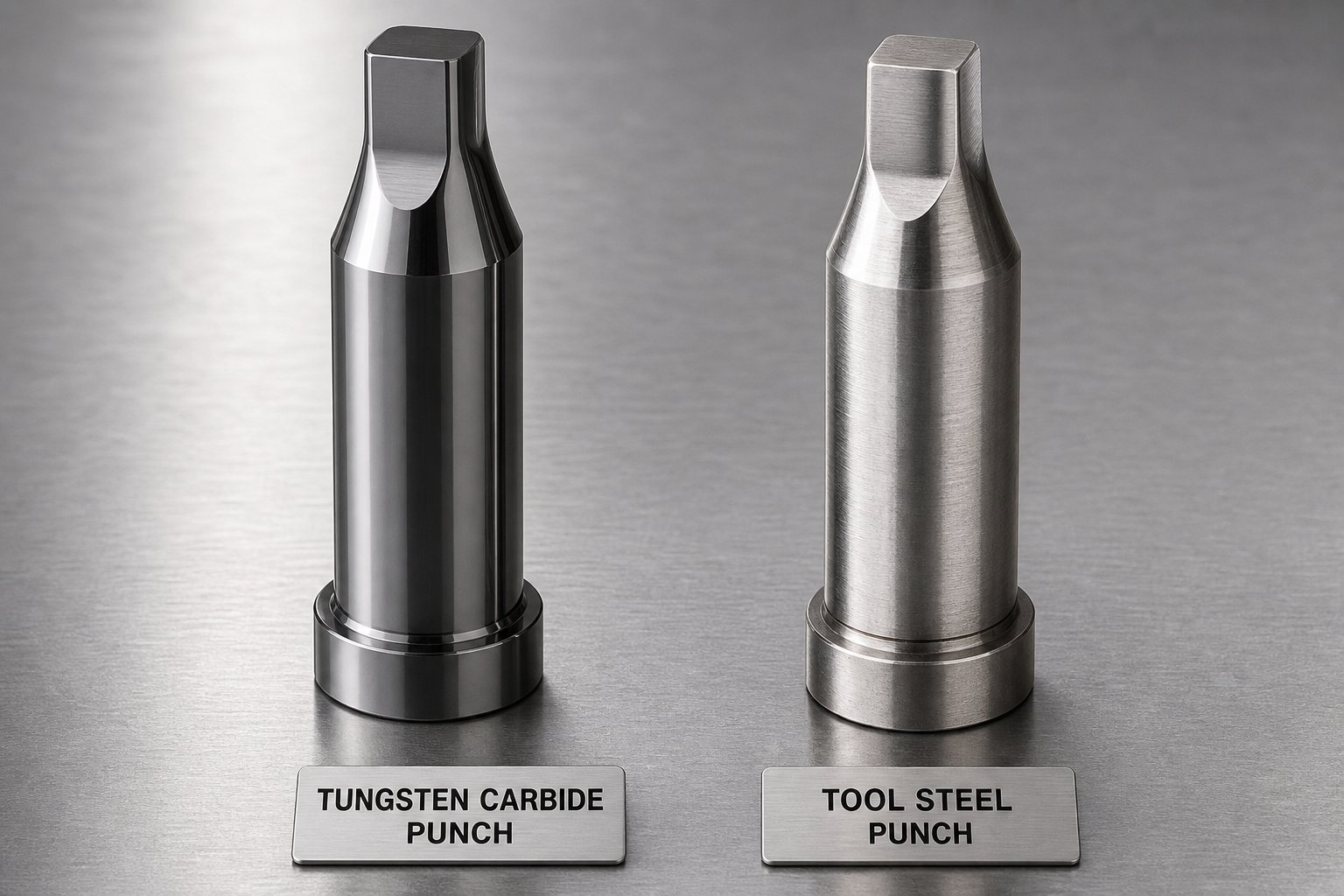
Carbide stamping dies are precision tooling components made from tungsten carbide (WC) particles bonded with a cobalt (Co) binder through powder metallurgy, engineered to blank, pierce, and form sheet metal at hardness levels far exceeding conventional tool steel.
That composition is what sets a carbide die apart from standard die steels like D2 or M2. Tungsten carbide provides extreme hardness, typically reaching HRA 85-92, while the cobalt binder acts as a metallic glue holding those hard WC grains together. The result is a material that resists abrasive wear far longer than any heat-treated tool steel can manage.
Common grades used in stamping applications include designations like K10, K20, K30, and K40, each varying in cobalt content and grain structure to suit different operational demands.
Why Carbide Outperforms Conventional Die Materials in Stamping
Imagine running a progressive die at 600 strokes per minute on electrical steel laminations. Tool steel dies in that scenario require frequent regrinding, sometimes after just tens of thousands of hits. Carbide dies in the same application can run many times longer between service intervals because the material simply resists wear at a fundamentally different level.
That advantage comes with trade-offs, though. Carbide is brittle. It costs more upfront. It demands tighter design tolerances and specific maintenance practices. When those factors are ignored or mismanaged, even the hardest carbide die will fail prematurely.
This article walks through the full decision chain, from selecting the right carbide grade and designing dies that account for the material's brittleness, to maintaining them properly and recognizing when carbide is simply the wrong choice for the job.
Carbide vs Tool Steel Dies and the Total Cost of Ownership
Knowing that carbide outperforms tool steel in raw hardness is one thing. Deciding whether it makes financial sense for your production run is another question entirely. The upfront price tag on a carbide die can be three to ten times higher than a comparable tool steel die, and that sticker shock stops many engineers from looking any further. But cost-per-die and cost-per-part are two very different numbers.
Tool Steel Alternatives and Their Limitations in High-Volume Runs
Most stamping operations default to tool steels because they're familiar, affordable, and versatile. D2, with its high chromium carbide content, delivers excellent abrasive wear resistance at 58-62 HRC. M2 high-speed steel handles heat better and holds edges well under friction. A2 offers dimensional stability during heat treatment, and S7 absorbs impact that would crack harder grades.
These are solid materials. For low-volume work, prototyping, or applications with soft workpiece metals, they perform well at a fraction of carbide's cost. The limitation shows up when you scale volume. In a progressive stamping die running hundreds of thousands of cycles, D2 and M2 punches wear down, burrs grow, and regrinding intervals shrink. Each regrind means downtime, setup labor, and a slightly shorter die. Multiply that across a multi-station progressive die, and the accumulated cost climbs fast.
Production Volume Thresholds That Justify Carbide Investment
There's no single magic number where carbide becomes the obvious choice. The crossover depends on the workpiece material, die complexity, and how much downtime costs your operation per hour. That said, industry analysis consistently points to medium-to-high volume production as the break-even zone. If your tool steel dies need replacement or major reconditioning multiple times within the production run, carbide's longer service life starts absorbing that upfront premium.
For progressive dies running abrasive materials like electrical steel or stainless, the threshold drops even lower. The more aggressively the workpiece wears the die, the faster carbide pays for itself. Conversely, stamping soft copper or aluminum in moderate volumes may never reach the crossover point.
Total Cost of Ownership Breakdown
The real comparison isn't die price. It's total cost of ownership: initial investment plus regrinding costs, downtime losses, scrap from worn tooling, and replacement frequency over the full production life. A carbide die that runs ten to twenty times longer than D2 before needing service dramatically reduces the carbide die cost per part, even though it costs five to ten times more on day one.
Here's how the three most common options compare across the factors that actually drive cost:
| Attribute | Tungsten Carbide | D2 Tool Steel | M2 High-Speed Steel |
|---|---|---|---|
| Relative Hardness Range | HRA 88-92 (approx. 70+ HRC equivalent) | 58-62 HRC | 60-65 HRC |
| Typical Die Life | Long (10-20x tool steel in comparable conditions) | Medium | Medium |
| Regrinding Frequency | Low | Moderate to High | Moderate |
| Best-Fit Production Volume | High-volume and abrasive-material runs | Low-to-medium volume; general stamping | Medium volume; heat-prone operations |
| Relative Upfront Cost | High (3-10x tool steel) | Low | Moderate |
| Toughness / Impact Resistance | Lower (brittle under shock) | Good | Good |
The pattern is clear: carbide vs tool steel dies isn't a question of which material is universally better. It's a question of where your production sits on the volume and wear spectrum. High-cycle progressive dies stamping abrasive materials represent carbide's sweet spot. Short runs on soft metals belong to D2 or S7.
What often gets overlooked in this analysis is grade selection within carbide itself. Not all tungsten carbide performs the same, and choosing the wrong grain size or binder percentage for your specific stamping operation can erase the longevity advantage you paid a premium to get.
Selecting the Right Carbide Grade for Stamping Applications
A carbide die that chips after 50,000 strokes isn't necessarily defective. It might just be the wrong grade for the job. Carbide grade selection for stamping is where die longevity is either built in or quietly undermined, and it's the single most overlooked variable when engineers specify tooling for progressive die & stamping operations.
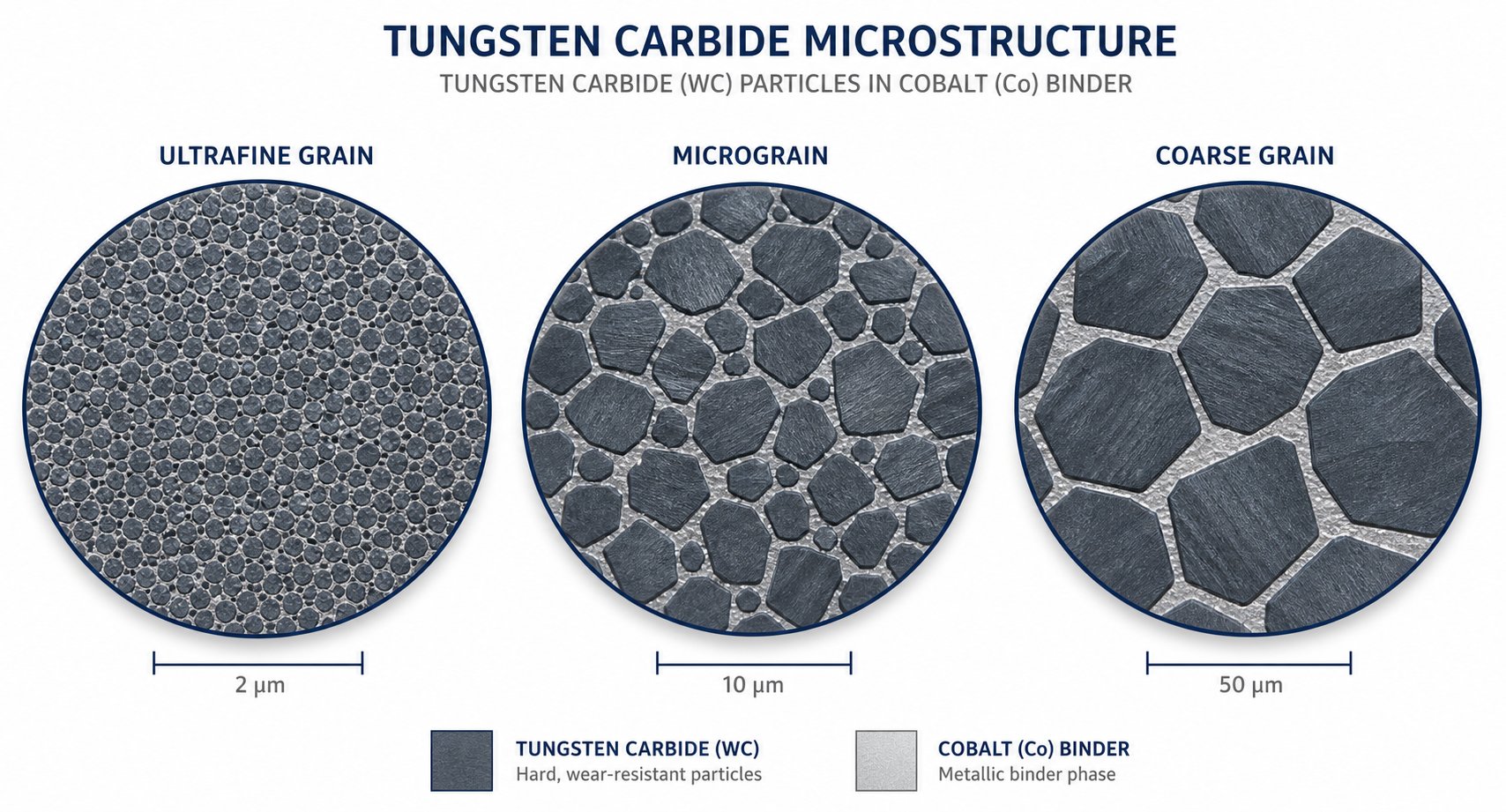
Every tungsten carbide die grade is defined by two core variables: grain size and binder content. Get the balance right, and the die holds geometry through millions of cycles. Get it wrong, and you'll either see premature edge chipping or accelerated abrasive wear, both of which mimic the symptoms of a die that's simply "worn out" when the real issue was material mismatch from the start.
Grain Size and Binder Content Trade-Offs Explained
Think of carbide grain size as the building block dimension. Smaller grains pack tighter, creating a denser microstructure with more hardness and sharper achievable edges. Larger grains leave more room for the cobalt binder to fill, which absorbs impact energy and resists cracking.
Here's how the common grain classifications break down in practice:
- Nano and ultrafine grain (below 0.5 microns): Maximum hardness and edge sharpness. These grades hold extremely tight tolerances and resist abrasive wear aggressively, but they're the most brittle option. Best suited for thin-material blanking where loads are primarily compressive.
- Submicron grain (0.5 to 0.7 microns): A strong balance of wear resistance and strength. Industry testing shows submicron grades support finer cutting edges and improved surface finish while maintaining reasonable toughness. These work well across precision blanking and light forming.
- Micrograin (0.7 to 1.3 microns): Better shock absorption and resistance to chipping under intermittent loading. When the stamping operation involves vibration, interrupted contact, or slightly misaligned setups, micrograin carbide survives conditions that would crack finer grades.
- Medium and coarse grain (above 1.3 microns): Highest toughness and impact resistance, but lower hardness. These grades handle heavy forming, deep drawing, and cold heading where the die absorbs significant lateral and compressive forces.
Cobalt binder content follows a parallel logic. Lower binder percentages (typically 6-10% Co) maximize hardness because there's less soft metal between the hard carbide particles. Higher binder percentages (12-25% Co) dramatically increase toughness, allowing the die to flex microscopically under impact without fracturing. Grade selection guides consistently frame this as identifying your failure mode first: if your dies wear out gradually, you likely need harder grades with finer grain and less binder. If they chip or crack, you need tougher grades with coarser grain and more cobalt.
Mapping Carbide Properties to Stamping Operations
Different stamping operations impose fundamentally different stress profiles on the die. A blanking punch experiences high compressive shock on every stroke. A forming die absorbs lateral forces as material flows across its surface. Matching the tungsten carbide die grade to the actual load type is what separates a die that lasts from one that fails early.
Here's how grade characteristics map to common operations:
- Blanking and piercing: Submicron to ultrafine grain, 6-10% cobalt. These operations demand sharp cutting edges that resist rounding. The load is compressive and repetitive, which suits harder, lower-binder grades. Federal Carbide's application guide lists grades like FC10M (submicron) as suitable for metal forming dies where both wear resistance and moderate strength are needed.
- Piercing small holes (high aspect ratio): Submicron grain, 8-12% cobalt. Small punches face lateral deflection risk, so a slight bump in binder content provides the fracture resistance that prevents snap-offs without sacrificing much edge life.
- Forming and bending: Micrograin to medium grain, 12-15% cobalt. Material slides across the die surface under combined compressive and shear loading. Tougher grades resist the micro-chipping that harder grades suffer when material flow creates unpredictable stress concentrations.
- Deep drawing: Medium to coarse grain, 15-25% cobalt. Drawing dies experience sustained contact pressure, friction heat, and material adhesion. Grades like FC11 and FC13, characterized by high impact strength and toughness, handle the demanding combination of forces that drawing operations produce.
Grade Selection for Progressive vs Compound Dies
Progressive carbide stamping dies add another layer of complexity because multiple operations happen within a single tool. A blanking station, a forming station, and a piercing station all live in the same die set, yet each demands different carbide properties.
This is where many shops make a critical mistake: specifying a single carbide grade across all stations for simplicity. The blanking stations get a grade that's too tough (and wears faster than necessary), while the forming stations get a grade that's too hard (and chips under lateral load). Both problems shorten overall die life.
The better approach is matching the grade to each station's dominant stress profile. Blanking and piercing stations benefit from submicron, low-binder grades optimized for edge retention. Forming and drawing stations perform better with micrograin or medium-grain grades carrying higher cobalt content for shock resistance. This multi-grade strategy costs slightly more in initial specification work, but it eliminates the weak-link problem where one station's premature failure forces the entire die offline for service.
Compound dies, which perform multiple operations simultaneously in a single stroke, generally favor a compromise grade, typically a submicron carbide with moderate binder (10-12% Co) that balances edge sharpness with enough toughness to handle the combined loading. The trade-off is acceptable because compound dies are typically used for simpler geometries where no single station faces extreme forming loads.
Grade selection sets the ceiling for how long your die can last. But even a perfectly matched carbide grade will underperform if the die design doesn't account for carbide's mechanical constraints, particularly its intolerance for tensile stress and lateral loading.
Progressive Die Design with Carbide Inserts
Carbide's intolerance for lateral loading and tensile stress isn't a reason to avoid it in progressive stamping die design. It's a reason to design differently. A prog die built around tool steel can absorb some sloppiness in clearance, alignment, and geometry. A die built with carbide components punishes every shortcut. The engineering decisions made at the design stage either harness carbide's extreme wear resistance or expose its brittleness on the first production run.
Punch-to-Die Clearance and Tolerance Achievability
Carbide punch and die clearance is where designers gain the most and risk the most simultaneously. Because carbide can be ground to tolerances of plus or minus 0.0001 inches on diameter, tighter clearances become physically achievable compared to tool steel. That precision translates to cleaner sheared edges, reduced burr height, and better part quality straight off the strip.
But tighter clearance means higher lateral load on the punch during extraction. Tool steel flexes under that load. Carbide fractures. Insufficient clearance concentrates bending stress in the punch shank, which is exactly the failure mode that destroys carbide tooling faster than abrasive wear ever would. Excessive clearance isn't harmless either. It produces a drawn edge rather than a sheared edge and causes the punch to seek center on each stroke, introducing cyclic fatigue loading.
The correct clearance depends on workpiece material thickness and tensile strength, and it should be explicitly specified on the die drawing rather than left to default shop practice. As a general principle, carbide clearances for blanking run tighter than tool steel equivalents, but the window is narrower. There's less room to be wrong.
Tonnage and Material Thickness Constraints for Carbide
Every stamping operation generates shock. Carbide absorbs compressive shock well but tolerates almost no tensile or bending stress before fracturing. This reality sets hard limits on what carbide components can handle within a progressive die.
Material thickness is the most direct constraint. Thicker stock requires more force to shear, which increases the lateral and tensile components of the load at the cutting edge. High-strength workpiece materials compound the issue. A punch piercing 0.020-inch soft copper faces a fundamentally different stress profile than the same geometry cutting 0.060-inch stainless steel, even at identical clearance percentages.
Tonnage requirements also interact with press dynamics. Minimizing die stroke reduces ram speed, which means less shock and vibration transmitted to carbide components on each cycle. The design principle is straightforward: if you can't reduce the required tonnage, reduce the stroke and stagger the cutting punches so they don't all engage simultaneously. That distributes shock across the press cycle rather than concentrating it in a single moment.
Corner radii on carbide punches deserve special attention here. Internal corners with no specified radius act as crack initiation sites under load. Geometry specialists note that a zero-radius internal corner on a carbide punch is almost never the right answer, regardless of what the stamped part geometry would otherwise call for. Even small blended radii at shank transitions significantly improve punch life where any lateral force exists.
Hybrid Die Construction with Carbide Inserts
Not every station in a progressive die faces the same wear demands. Blanking and piercing stations that contact abrasive material on every stroke degrade fastest. Idle stations, pilot stations, and some forming stations see far less wear. Designing the entire die in carbide is usually both economically unjustified and mechanically counterproductive, since forming stations often benefit from tool steel's superior toughness.
The hybrid approach, known as carbide insert die design, places carbide components only where they earn their premium: high-wear cutting stations that would otherwise require frequent regrinding. Tool steel handles stations where impact loads dominate or where geometry changes are anticipated during development. This balances die life, cost, and serviceability.
When specifying carbide inserts within a progressive die, engineers should follow a deliberate sequence that accounts for carbide's mechanical constraints at every step:
- Identify which stations experience the highest wear rate based on historical data or workpiece material abrasiveness.
- Confirm that the geometry at each candidate station can accommodate carbide's minimum corner radius and cross-section requirements without creating stress concentration points.
- Select the appropriate carbide grade for each station based on the dominant stress profile: harder, finer-grain grades for blanking; tougher, coarser grades for any station with lateral loading.
- Specify punch-to-die clearance per station based on workpiece thickness and material, documenting it explicitly on the die drawing.
- Design the insert mounting so that seating surfaces are flat and stable, preventing rocking that concentrates load on high points during impact.
- Verify that the press tonnage, die stroke, and strip lift are minimized to limit vibration and shock transmitted to carbide components.
- Incorporate poka-yoke features so inserts cannot be installed backward or upside down during maintenance, eliminating reinstallation errors that cause immediate fracture.
This sequence prioritizes failure prevention over performance optimization. A carbide insert that survives reliably always outperforms one that delivers perfect parts for a week before cracking.
Even with ideal design, though, carbide dies in production eventually degrade. The question is how they degrade, because the wear mechanism determines whether a process adjustment, a coating change, or a different grade would have extended die life significantly.
Wear Mechanisms That Shorten Carbide Die Life
A carbide die that fails early always tells you why, if you know what to look for. The degradation pattern on the working surfaces reveals which mechanism is doing the damage, and each mechanism points to a different root cause in your process. Treating all carbide die failure modes the same way, say, by simply regrinding and putting the die back in service, guarantees the problem repeats. Identifying the specific carbide die wear mechanisms at play lets you target the actual cause rather than just its symptoms.
Four primary mechanisms account for the vast majority of premature wear in carbide stamping applications: abrasive wear, adhesive wear, fatigue cracking, and thermal shock. They often overlap, but one usually dominates. Recognizing which one drives your die degradation is the difference between a targeted fix and an expensive guessing game.
Abrasive and Adhesive Wear in Carbide Dies
Abrasive wear is the most straightforward mechanism. Hard inclusions, scale, or particulate in the stamped material act like sandpaper dragging across the die surface on every stroke. Carbon steel progressive stamping operations are particularly susceptible when the strip carries mill scale or oxide layers. Electrical steel laminations, with their silicon content and hard surface coatings, also accelerate abrasive degradation rapidly.
What happens at the microstructural level is progressive material loss. Hard particles in the workpiece gouge out or dislodge individual carbide grains from the binder matrix. Federal Carbide notes that abrasive wear represents the progressive loss of material at the carbide surface due to sliding or rubbing of a mating component or work material over it. The rate depends on the contact pressure and the hardness of the abrasive relative to the carbide surface. You'll notice this mode visually as smooth, uniform wear land development along cutting edges, gradual rounding of previously sharp features, and a polished or lapped appearance on contact areas.
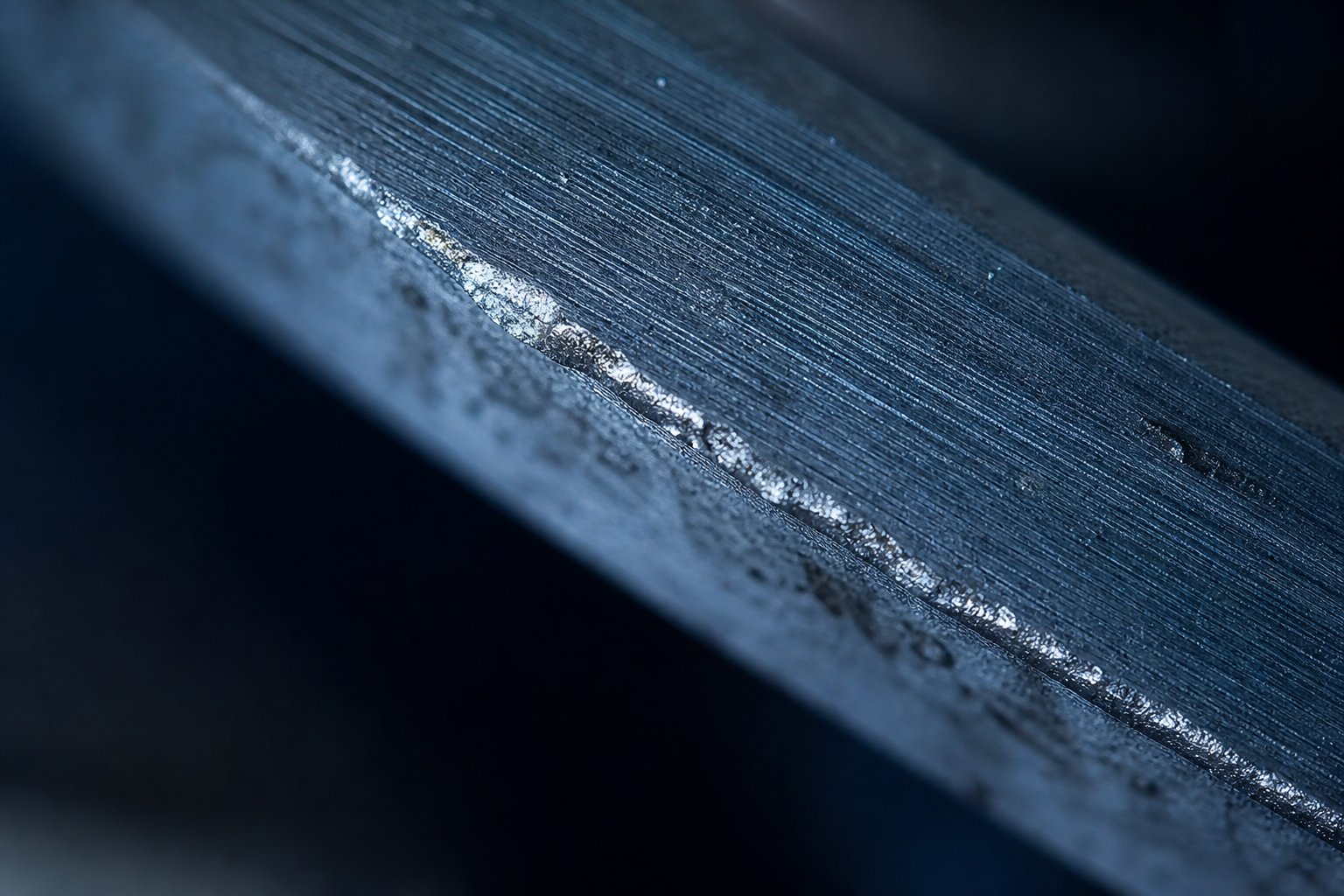
Adhesive wear, commonly called galling, is a different animal. It occurs when the workpiece material bonds to the die surface under the heat and pressure of stamping. Stainless steel and aluminum are notorious for this behavior. High friction at contact points generates enough localized temperature and pressure to cause micro-welding between the workpiece and the die face. Material transfers, builds up, and eventually tears away, pulling chunks of the carbide surface with it.
The visual signature of galling is unmistakable: irregular material buildup on the die face, rough or pitted surface areas where transferred material has torn away, and scoring marks that follow the direction of material flow. Unlike abrasive wear's smooth progression, adhesive damage looks violent and uneven.
Fatigue Cracking and Thermal Shock Failure Modes
Fatigue cracking develops slowly and fails suddenly. Every press stroke loads and unloads the carbide component. Over hundreds of thousands of cycles, microscopic cracks nucleate at stress concentration points, corners, sharp transitions, or surface defects. These cracks propagate incrementally with each load cycle until a critical length is reached, at which point the crack runs through the component and produces catastrophic fracture.
What accelerates fatigue in carbide? Anything that increases the tensile or bending stress component: excessive tonnage, insufficient punch-to-die clearance, misaligned press setups, or strip misfeed events that apply off-axis load. Progressive die operations running at high stroke rates compound the problem because the die accumulates load cycles faster. Visually, fatigue manifests as fine, often parallel cracks radiating from edges or corners. In early stages, you might notice small chips or spalls at edge transitions before full fracture occurs.
Thermal shock is the rapid-onset cousin of fatigue. Carbide has relatively poor thermal shock resistance, and sudden temperature changes often produce failure by thermal cracking. In high-speed stamping, the die surface heats during each stroke from friction and workpiece contact, then cools rapidly between strokes or when coolant/lubricant contacts the hot surface. That thermal cycling creates expansion-contraction stresses that the rigid carbide structure cannot accommodate plastically.
Thermal cracks appear as a network of fine, closely-spaced cracks, sometimes resembling a craze pattern on a ceramic surface. They typically radiate from edges of the die and deepen over time, eventually causing material to spall away between them. High stroke speeds, inadequate lubrication, and interrupted cooling all accelerate this mechanism.
Visual Inspection Indicators for Each Wear Type
Die-shop personnel don't always have access to microscopes or lab analysis during scheduled maintenance windows. Fortunately, each wear mechanism leaves a distinct visual fingerprint that's identifiable with a loupe or even the naked eye, provided you know what patterns to look for.
The table below maps each mechanism to its operational triggers, what it looks like during inspection, and what you can do about it:
| Wear Mechanism | Primary Causes | Visual Signs | Recommended Countermeasures |
|---|---|---|---|
| Abrasive Wear | Hard inclusions in workpiece; mill scale; abrasive coatings on strip; high contact pressure | Smooth, uniform wear lands; gradual edge rounding; polished or lapped contact surfaces | Switch to finer-grain, lower-binder carbide grade; improve strip cleaning; verify incoming material spec |
| Adhesive Wear (Galling) | Stamping stainless steel, aluminum, or other adhesion-prone materials; inadequate lubrication; high die-surface temperature | Irregular material buildup on die face; pitting where transferred material tore away; scoring in direction of material flow | Apply TiN or CrN coating; polish die surfaces to lower roughness; increase lubrication; reduce press speed |
| Fatigue Cracking | Cyclic loading at high stroke counts; stress concentrations at sharp corners; excessive tonnage; misalignment | Fine parallel cracks radiating from edges or corners; small chips or spalls at transitions; eventual catastrophic fracture | Add corner radii to stress risers; reduce tonnage or stagger punch engagement; switch to higher-binder grade for improved toughness |
| Thermal Shock | High stroke speed; rapid heating/cooling cycles; inconsistent lubrication; interrupted coolant application | Network of fine craze-pattern cracks; closely-spaced radial cracks from edges; spalling between crack lines | Reduce stroke rate; apply consistent lubrication; use coarser-grain grade with higher thermal shock resistance; avoid sudden coolant contact on hot surfaces |
The critical takeaway here is that each mechanism calls for a different corrective action. Regrinding fixes the symptom of abrasive wear temporarily, but it does nothing for a die failing from thermal shock. Applying a coating solves galling but won't prevent fatigue cracking caused by excessive clearance. Matching the countermeasure to the actual failure mode is what separates shops that get full die life from those replacing tooling on repeat.
Of course, coatings keep appearing as a countermeasure in this framework, and for good reason. Surface treatments represent one of the most effective, and most underutilized, strategies for extending carbide die performance in the specific conditions where adhesive and abrasive wear dominate.
Surface Treatments and Coatings for Extended Die Performance
Carbide is already one of the hardest die materials available. So why add a coating on top of it? Because hardness alone doesn't solve every wear problem. When adhesive buildup, friction heat, or surface oxidation are the dominant failure drivers, a thin PVD coating changes the surface interaction between the die and the workpiece without altering the carbide substrate's core strength. Think of it as adding a specialized skin that handles the contact chemistry while the carbide underneath handles the structural load.
For OEM progressive stamping operations running stainless steel, aluminum, or coated strip materials, carbide die coatings can extend service intervals dramatically by attacking the specific mechanism, galling, that accelerates die degradation in those applications. The coating doesn't make the die harder in bulk. It makes the surface slipperier, more chemically inert, and less prone to micro-welding with the workpiece.
TiN, TiCN, and CrN Coatings Compared
Three PVD coatings dominate stamping die applications, each optimized for different conditions:
TiN (Titanium Nitride) is the most widely used and recognizable coating, identifiable by its gold color. It delivers high hardness, high wear resistance, and oxidation resistance, making it suitable for general-purpose die protection. TiN coated stamping dies perform well across mild steel and medium-carbon steel blanking, where moderate friction reduction and improved surface hardness extend edge life without requiring specialized chemistry. Its operating temperature ceiling, around 500-600 degrees Celsius, limits its effectiveness in high-speed operations where friction generates significant heat.
TiCN (Titanium Carbonitride) builds on TiN's foundation by adding carbon to the coating structure. The result is lower internal stress, higher toughness, and improved lubricity compared to straight TiN. That lower friction coefficient makes TiCN particularly effective when stamping materials prone to sticking, like stainless steel and aluminum alloys. HVAC progressive metal stamping operations, which frequently process galvanized and stainless strip, benefit from TiCN's combination of adhesion resistance and mechanical durability.
CrN (Chromium Nitride) takes a different approach entirely. Rather than maximizing hardness, CrN provides strong lubricity and high temperature resistance with excellent corrosion resistance. It's the go-to choice for copper progressive stamping applications, where copper's tendency to adhere and build up on die surfaces causes rapid degradation of uncoated tooling. CrN's chemical inertness to non-ferrous metals makes it the preferred barrier coating for dies processing copper, brass, and bronze strip.
Here's how these three coatings compare across the dimensions that matter most for stamping die selection:
| Coating Property | TiN (Titanium Nitride) | TiCN (Titanium Carbonitride) | CrN (Chromium Nitride) |
|---|---|---|---|
| Adhesion Resistance | Moderate | High | Very High (especially non-ferrous) |
| Operating Temperature Range | Up to ~500-600°C | Up to ~400-500°C | Up to ~700°C |
| Best-Fit Stamped Materials | Mild steel, medium-carbon steel, general-purpose blanking | Stainless steel, aluminum, galvanized steel | Copper, brass, bronze, corrosion-prone environments |
| Friction Reduction | Moderate | High | High |
| Relative Cost | Low (baseline PVD cost) | Moderate | Moderate to High |
| Typical Thickness | 1-5 microns | 1-4 microns | 1-5 microns |
When Coatings Justify the Additional Investment
Coatings aren't always necessary. If your carbide dies are stamping mild steel in moderate volumes and wear progresses gradually through normal abrasion, uncoated carbide with the correct grade selection will deliver its full expected service life. The coating adds cost without addressing the dominant failure mechanism.
Coatings earn their investment when specific conditions exist:
- Adhesion-prone workpiece materials: Stainless steel, aluminum, and copper alloys generate galling that no amount of carbide hardness can prevent. Coatings create a chemical and physical barrier that stops the micro-welding before it starts.
- High-volume production runs: The coating cost is fixed per application, but the benefit multiplies with every additional stroke. On a progressive die running millions of cycles, even a modest percentage improvement in die life translates to significant savings in regrinding and downtime.
- Inadequate lubrication access: Some die geometries or strip conditions make consistent lubricant delivery difficult. A low-friction coating compensates partially for inconsistent lubrication at the die-workpiece interface.
- Tight surface finish requirements on stamped parts: Coated dies maintain smoother contact surfaces longer, which directly transfers to better part finish consistency across the production run.
The economic logic is simple: if your carbide dies are failing primarily from adhesive wear or friction-related degradation, a coating that costs a fraction of the die's value can double or triple the interval between service events. If they're failing from fatigue cracking or thermal shock, a coating won't help, and the money is better spent on grade changes or design modifications.
Coatings also interact with your maintenance strategy. A coated die that gets reground loses its coating on the reground surface, which means recoating is required after each regrind cycle to maintain performance. That ongoing cost needs to factor into your total maintenance budget and regrinding decision framework.
Maintenance and Regrinding Best Practices for Carbide Dies
A coated carbide die running in a well-designed progressive tool still has a finite service window between sharpening events. The difference between shops that extract full die life and those that replace tooling prematurely often comes down to one thing: a disciplined carbide die maintenance schedule that catches degradation early and addresses it correctly. Waiting until parts fail inspection means you've already run thousands of bad pieces. Catching the first signs of wear before they reach the part means you control the downtime rather than reacting to it.
Regrinding Triggers and Scheduling Frameworks
How do you know when a carbide die actually needs service? Three measurable indicators give you reliable advance warning before part quality deteriorates noticeably:
- Burr height: As cutting edges dull, the shear zone shifts and burrs grow. Measuring burr height on stamped parts at regular intervals gives you a direct, quantifiable indicator of edge condition. When burr height approaches your part print tolerance limit, the die is due for regrinding, not after it exceeds the limit.
- Part dimensional drift: Worn die geometry produces parts that gradually drift toward tolerance boundaries. Tracking critical dimensions over time reveals a trend line that predicts when the die will go out of spec, letting you schedule service proactively.
- Stroke count: Historical data from previous regrind cycles tells you approximately how many strokes each die station delivers before needing service. Progressive die manufacturers who track stroke-to-regrind ratios can schedule maintenance windows in advance rather than reacting to quality escapes.
Some shops also monitor press tonnage as a secondary indicator. As cutting edges dull, the force required to shear material increases. A progressive die maintenance guide from Wisconsin Metal Parts notes that increased tonnage and unusual press noises are tell-tale signs that tooling needs attention. Combining tonnage data with stroke counts and burr measurements creates a three-point confirmation system that virtually eliminates guesswork.
The goal is a predictive carbide die maintenance schedule rather than a reactive one. Save the last part from each production run along with the end strip. This gives your toolmaker a baseline to compare against when evaluating die condition during the next service window.
Proper Regrinding Technique for Carbide Components
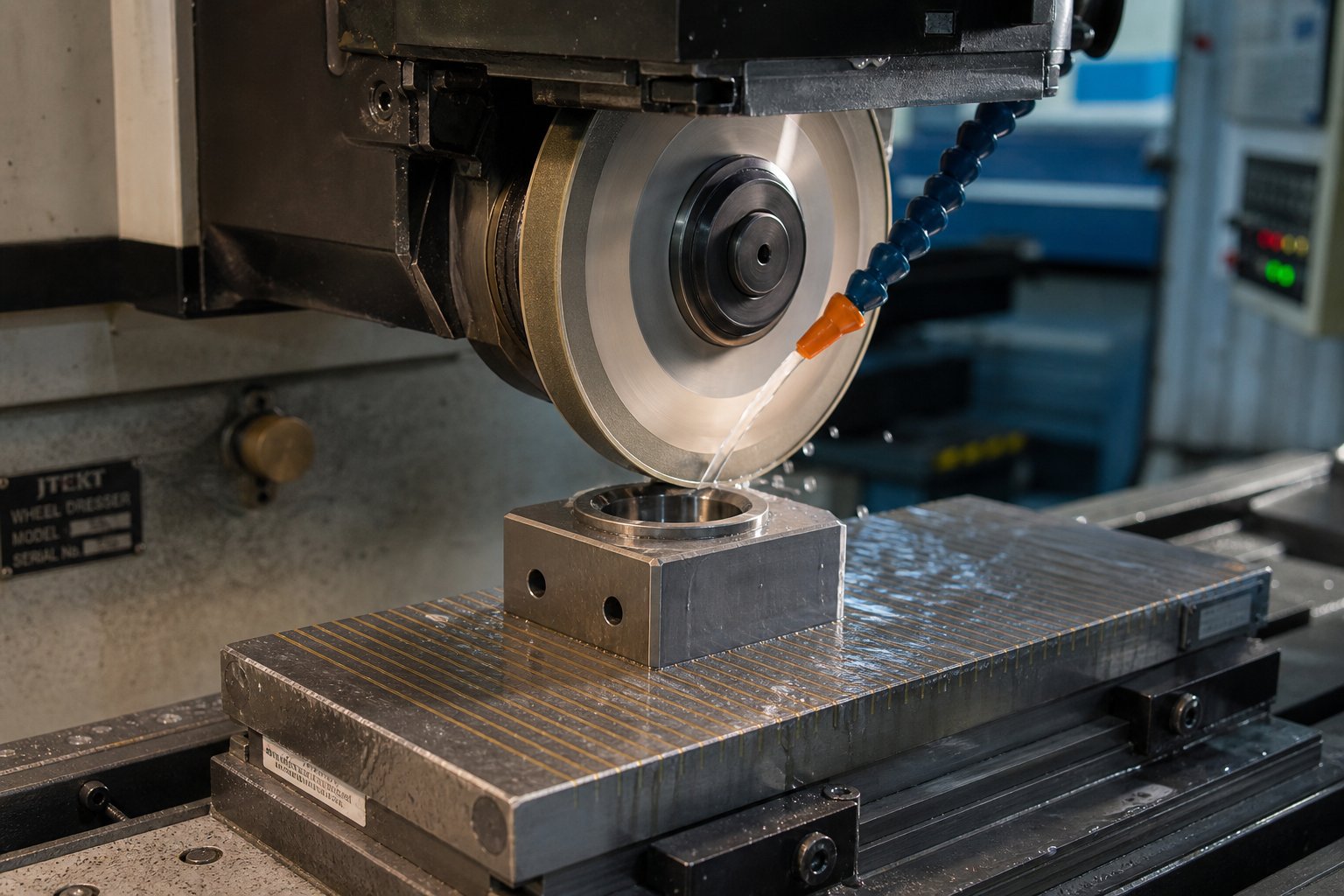
Carbide die regrinding is not the same process as sharpening tool steel. The material's extreme hardness means conventional aluminum oxide wheels won't cut it, literally. Using the wrong wheel causes glazing, excessive heat, surface micro-cracking, and subsurface damage that weakens the die without visible evidence.
Diamond grinding wheels are the required abrasive for carbide regrinding. Synthetic diamond, with a hardness of approximately 10,000 HV, is the only abrasive that cuts tungsten carbide efficiently without generating destructive thermal damage. Green silicon carbide wheels can work for lighter operations but don't match diamond's efficiency or surface quality on hardened carbide die components.
The critical parameters for carbide die regrinding include:
- Wheel specification: Resin-bonded diamond wheels with grit size ranging from F150 to F240 and concentration of 100-150%. Finer grits produce better surface finish on the reground edge.
- Wheel speed: 15-25 m/s. Running faster risks thermal damage; running slower reduces cutting efficiency and can cause wheel loading.
- Depth of cut: 0.005-0.025 mm per pass. Aggressive stock removal generates heat that creates micro-cracks below the surface, invisible but structurally damaging. Light passes preserve edge integrity.
- Coolant: Kerosene or light oil-based grinding fluids prevent overheating. Flood coolant is preferred over mist. Never grind carbide dry.
- Stock removal limit: Each regrind removes material from the die's working height. Track cumulative stock removal against the original die dimension. Most carbide die designs allow a total regrind depth before the component reaches its minimum functional height.
One detail that progressive die stampings suppliers frequently overlook: if the die was coated before regrinding, the coating is removed from the reground surface. Recoating after each regrind cycle is necessary to maintain the anti-adhesion performance that justified the coating in the first place.
Replace vs Recondition Decision Criteria
Every regrind shortens the die. At some point, continued reconditioning delivers diminishing returns, and replacement becomes the smarter investment. But how do you decide when that threshold has been crossed?
The decision framework mirrors what industrial die repair specialists recommend: evaluate based on current condition, repair scope, post-repair expected life, and upcoming production requirements. For carbide stamping components specifically, consider these factors:
- Cumulative regrind depth: If the die has been reground to within 20-25% of its minimum functional height, the remaining regrind life is too short to justify the labor and recoating cost of another service cycle.
- Presence of fatigue cracks: Surface cracks that extend beyond the regrind stock removal depth cannot be ground away. They'll propagate further regardless of sharpening. Cracked carbide components should be replaced, not reground.
- Post-regrind performance decline: If die life between regrinds is shortening progressively with each cycle, subsurface damage or microstructural degradation is accumulating faster than surface restoration can address.
- Dimensional changes beyond correction: Carbide components that have worn in ways regrinding can't restore, such as lateral wear on forming surfaces or diameter growth on die openings, have reached end of life for reconditioning.
Here's a step-by-step inspection checklist for die-shop personnel to follow during scheduled maintenance windows:
- Record the current stroke count since the last regrind and compare against historical averages for that station.
- Measure burr height on retained sample parts from the end of the production run. Document the measurement and compare to the part print tolerance.
- Inspect all carbide cutting edges under magnification (10x minimum) for chipping, micro-cracks, or galling buildup.
- Measure the remaining regrind stock using a height gauge or micrometer against the die's documented minimum functional dimension.
- Check for fatigue crack indicators: fine lines radiating from corners, small spalls at edge transitions, or any visible fracture propagation.
- Evaluate the condition of any PVD coating: if breakthrough to bare carbide is visible across more than 30% of the working surface, plan for recoating after regrind.
- Document all findings and update the die's maintenance log with stroke count, measurements, observed wear type, and the action taken (regrind, recoat, replace, or return to service).
That documentation isn't busywork. It builds the historical dataset that makes your next regrind timing decision predictive rather than reactive. Over time, you'll see patterns emerge: specific stations wearing faster on certain materials, seasonal variation in die life tied to strip quality changes, or coating types that consistently outperform others in your specific application.
Maintenance keeps your dies running. But the die's performance ceiling, how long it can possibly last between service events, is largely set before the first stroke falls. That ceiling depends heavily on what you're stamping, because workpiece material properties drive wear rate more than almost any other variable in the system.
Matching Carbide Grade to Your Stamped Workpiece Material
The workpiece sitting on your strip isn't a passive participant in die wear. It's the primary aggressor. Two dies built from the same carbide grade, running at the same stroke rate, in the same press, will deliver wildly different service lives if one is blanking electrical steel laminations and the other is forming copper bus bars. The material being stamped dictates the dominant wear mechanism, which in turn dictates the correct carbide grade, surface finish, clearance, and coating strategy. Ignore that relationship and you'll replace dies on a schedule your production plan never accounted for.
How Stamped Material Properties Drive Carbide Selection
Every workpiece material attacks carbide tooling differently. Abrasive materials like electrical steel contain hard silicon inclusions and insulation coatings that grind away the die surface grain by grain. These demand the finest-grain, hardest carbide grades available because the failure mode is pure material loss from sliding contact. Finer grains pack tighter, leaving fewer exposed binder pockets for abrasive particles to excavate.
Galling-prone materials like stainless steel and aluminum present the opposite problem. They're not especially hard, but they bond to the die surface under heat and pressure. That adhesive buildup tears carbide grains out of the matrix when it eventually separates, creating irregular surface damage that accelerates with each stroke. For these materials, carbide grade hardness matters less than surface finish and coating chemistry. A polished die face with a CrN or TiCN coating resists micro-welding far more effectively than a harder but rougher uncoated surface.
Copper progressive stamping is where carbide truly earns its premium over tool steel. Copper is soft, but its ductility and thermal conductivity create aggressive adhesive buildup on tool steel surfaces. Production experience from Penn United confirms that carbide tooling paired with appropriate PVD coatings dramatically outperforms tool steel in progressive stamping copper and copper alloy strip, where adhesion would otherwise require constant die cleaning and frequent regrinding.
Automotive components progressive stamping adds another variable: material diversity within a single production facility. A shop running dual-phase steels, aluminum body panels, and brass connectors across different press lines needs carbide specifications tailored to each material, not a one-grade-fits-all approach.
Grade Recommendations by Workpiece Material
The table below maps common stamped materials to the carbide properties and surface treatments that address each material's specific wear behavior:
| Workpiece Material | Recommended Carbide Properties | Primary Wear Concern | Suggested Coating |
|---|---|---|---|
| Electrical Steel (Silicon Steel) | Ultrafine to submicron grain; 6-10% Co; maximum hardness | Abrasive wear from hard silicon inclusions and insulation coatings | TiN or uncoated (abrasion dominates over adhesion) |
| Stainless Steel (301, 304, 17-4) | Submicron grain; 10-12% Co; polished die surfaces (Ra below 0.2 microns) | Adhesive wear and galling; work hardening increases contact stress | TiCN or CrN (anti-galling chemistry critical) |
| Copper and Copper Alloys | Submicron to micrograin; 10-12% Co; mirror-polished contact surfaces | Adhesive buildup; material transfer to die face | CrN (chemically inert to non-ferrous metals) |
| Aluminum (1xxx-6xxx series) | Micrograin; 10-14% Co; polished surfaces essential | Severe galling; aluminum oxide abrasion on harder alloys | TiCN or CrN (friction reduction prevents micro-welding) |
| Brass (CuZn alloys) | Submicron to micrograin; 10-12% Co | Moderate adhesion; zinc buildup at elevated temperatures | CrN preferred; TiN adequate for low-speed operations |
Notice the pattern: abrasive materials push you toward harder, finer-grain grades where raw wear resistance is the priority. Adhesion-prone materials push you toward moderate hardness with polished surfaces and specialized coatings that prevent material bonding at the interface. Trying to solve an adhesion problem with a harder grade is a common and expensive mistake.
Die clearance also shifts with workpiece material. Higher-strength steels require wider clearances to prevent excessive lateral loading on carbide punches, while softer materials like copper and aluminum allow tighter clearances that produce cleaner sheared edges. Research on advanced high-strength steels confirms that the higher forces needed to penetrate stronger materials demand increased punch-to-die clearances compared to mild steel, a principle that directly applies when specifying carbide tooling for automotive stamping applications.
Starting Your Material-Selection Research
Getting carbide grade selection right requires understanding both sides of the equation: the die material and the workpiece material. Engineers and sourcing teams often specify one without fully considering the other, which leads to mismatched tooling that underperforms from day one.
A practical starting point is to map your workpiece material's mechanical properties, surface characteristics, and known wear tendencies against the carbide grade chart above. If you're evaluating multiple part materials across different product lines, resources like YICHEN's materials page provide consolidated reference data covering aluminum, steel, stainless steel, brass, magnesium, and carbide-related production materials in one place. That kind of side-by-side visibility helps when you need to specify both the part material and the die material simultaneously, ensuring your carbide selection accounts for the specific workpiece it will be cutting or forming.
The material pairing decision also feeds directly into your coating strategy, clearance specification, and expected maintenance interval. It's not a standalone choice but the foundation that every downstream tooling decision should reference.
All of this guidance assumes carbide is the right answer for your application. But that assumption doesn't always hold. There are scenarios where carbide's brittleness, cost, and size limitations make it the wrong tool for the job, and recognizing those situations early saves both money and frustration.
When Carbide Dies Are Not the Right Choice
Carbide solves a lot of problems in high-volume stamping. It doesn't solve all of them. Every advantage this material offers, extreme hardness, tight tolerance capability, long service intervals, comes with a corresponding limitation that makes it genuinely wrong for certain applications. Recognizing those situations before committing to a purchase order is worth more than any grade selection chart or coating recommendation.
The carbide die limitations discussed here aren't edge cases or theoretical concerns. They're the scenarios where experienced progressive die manufacturers routinely specify tool steel instead, not because they don't understand carbide's benefits, but because they understand its boundaries.
Low-Volume and Prototyping Scenarios
Imagine you're running a 5,000-piece order for an automotive dies application that may not see a reorder. The upfront cost of carbide tooling, potentially three to ten times higher than D2 or A2, never gets amortized across enough parts to break even. Your cost-per-part stays elevated for the entire run, and you're left with expensive tooling that may never see a press again.
Prototyping compounds this problem further. During product development, part geometry changes between iterations. Each design revision may require new die components. Investing in carbide for tooling that might be obsolete after the next engineering change notice is burning money. Tool steel can be machined faster, modified more easily, and scrapped without the financial sting that accompanies discarding a carbide component.
Industry guidance on low-volume tooling reinforces this logic: progressive die stamping relies on high-speed presses and multi-stage tooling that becomes uneconomical for small quantities. The dies are expensive and time-intensive to produce, and their value lies in producing thousands of identical parts per hour. Using such tooling for short runs results in high per-unit costs and underutilized equipment. For low-output products, simpler tooling approaches are more effective even if they wear faster.
The break-even calculation is straightforward. If your tool steel die can survive the entire production run with one or two regrinds, the total cost including labor and downtime will still come in well below a carbide alternative that delivers the same parts with zero regrinds. Carbide's economic advantage only materializes when the production volume is large enough for multiple tool steel replacements to exceed the single carbide investment.
Geometric and Mechanical Limitations of Carbide
Carbide's brittleness isn't just a design consideration. It's a hard disqualification for certain die geometries and loading conditions. As stamping expert Thomas Vacca notes, the ideal approach is to use the hardest possible cutting tooling, carbide, unless the geometry is so fine it does not hold up. When it doesn't, you back down on hardness and increase toughness.
Several geometric and mechanical conditions push you away from carbide:
- Very fine, unsupported geometry: Thin cross-section punches, narrow slots, and high-aspect-ratio piercings concentrate stress in ways carbide cannot tolerate. Tool steel flexes under asymmetric load; carbide snaps.
- Nonsymmetrical loading: Forming arbors or die sections that experience off-center forces require materials that absorb energy through plastic deformation rather than fracture. Vacca describes a case where multiple hardness-focused materials failed a nonsymmetrical forming application, and the solution required sacrificing hardness for toughness using a high-impact tool steel like CPM 3V.
- Large die sizes: Carbide blanks are produced through powder metallurgy and sintering, which limits practical blank dimensions. Very large die sections, think automotive panel dies or deep-draw dies exceeding several inches in any dimension, become prohibitively expensive or simply unavailable as solid carbide components. The material cost scales with volume, and sintering large blanks without internal defects becomes progressively more difficult.
- Misalignment-prone press setups: Older presses with worn gibs, multi-station transfer dies with cumulative positioning error, or any setup where lateral deflection is likely impose bending loads that carbide cannot accommodate. Even slight misalignment that tool steel would absorb without visible damage can crack a carbide punch or die section.
- High-impact operations: Coining, deep embossing, and heavy forming operations generate shock loads that exceed carbide's fracture toughness even in higher-binder grades. The cyclic impact destroys carbide through fatigue cracking far faster than it would degrade a shock-resistant tool steel like S7.
One insight from experienced die builders is worth emphasizing: roughly 20 percent of progressive die problems relate to materials and 80 percent relate to design and build. Eliminating vibration with robust tool design, staggering punches, and minimizing stroke can do more for die life than any punch material can achieve alone. Carbide doesn't wear like conventional steel; the edges break down and disintegrate. If your press setup generates vibration or lateral movement, no carbide grade will overcome that fundamental problem.
Practical Decision Checklist
Before specifying carbide for your next die project, run through these contraindications. If any apply, tool steel is likely the better investment:
- Total production volume is below the point where tool steel would require multiple die replacements or major reconditioning cycles.
- Part geometry is still in development and design changes are expected before production locks.
- Die components include cross-sections thinner than 3-4 times the material thickness being stamped, creating fracture risk under lateral load.
- The press setup has known alignment issues, worn gibs, or cannot maintain parallelism within tight tolerances across the full stroke.
- The operation involves heavy forming, deep drawing, or coining where impact and lateral forces dominate over compressive wear.
- Required die component dimensions exceed available carbide blank sizes, forcing multi-piece construction that introduces joint weakness.
- The die must tolerate occasional strip misfeed events or double-thickness hits without catastrophic failure.
- Budget constraints prevent proper diamond-wheel regrinding and PVD recoating, meaning maintenance quality will be compromised throughout the die's service life.
Choosing tool steel in these scenarios isn't settling for less. It's selecting the material whose mechanical properties actually match the demands of the application. A D2 die that survives a million strokes in a high-impact operation delivers more value than a carbide die that cracks after 50,000.
The honest answer to when not to use carbide dies is straightforward: when the application demands ductility, when the economics don't support the investment, or when the operating environment can't protect the material from its own brittleness. Every other scenario, the ones with high volume, abrasive materials, tight tolerances, and disciplined press maintenance, is where carbide delivers the performance that justifies its premium.
Frequently Asked Questions About Carbide Stamping Dies
1. How long do carbide stamping dies last compared to tool steel dies?
Carbide stamping dies typically last 10 to 20 times longer than comparable tool steel dies like D2 or M2 under similar production conditions. The actual service life depends on the workpiece material being stamped, press speed, lubrication quality, and whether the correct carbide grade was selected for the application. Abrasive materials like electrical steel shorten life more than soft metals like copper, but carbide still significantly outperforms tool steel in those demanding environments.
2. What carbide grade should I use for progressive stamping dies?
Progressive dies benefit from a multi-grade strategy rather than a single grade across all stations. Blanking and piercing stations perform best with submicron grain carbide at 6-10% cobalt binder for maximum edge retention. Forming stations need micrograin or medium-grain grades with 12-15% cobalt for toughness against lateral loads. This station-specific approach eliminates the weak-link problem where one station fails prematurely and forces the entire die offline.
3. When should I choose tool steel over carbide for stamping dies?
Tool steel is the better choice when production volumes are too low to amortize carbide's higher upfront cost, when part geometry is still changing during prototyping, when die sections require high impact toughness that exceeds carbide's brittleness limits, or when press setups have alignment issues that create lateral loading. Operations involving heavy coining, deep embossing, or very fine unsupported punch geometries also favor shock-resistant tool steels like S7 or CPM 3V over carbide.
4. What coatings work best on carbide stamping dies?
The best coating depends on what you are stamping. TiCN works well for stainless steel and aluminum because it reduces friction and prevents galling. CrN is preferred for copper, brass, and bronze due to its chemical inertness to non-ferrous metals. TiN serves as a cost-effective general-purpose option for mild steel blanking. Coatings justify their cost primarily when adhesive wear or galling is the dominant failure mode rather than simple abrasive wear.
5. How do I know when a carbide die needs regrinding versus replacement?
Three measurable indicators signal regrinding is needed: increasing burr height approaching tolerance limits, part dimensional drift toward specification boundaries, and reaching the historical stroke count between service intervals. Replace rather than regrind when cumulative stock removal approaches 75-80% of the die's total allowable regrind depth, when fatigue cracks extend below the regrind surface, or when die life between successive regrinds is shortening progressively, indicating subsurface damage that sharpening cannot restore.


